




B.E. Computer Science and Engineering (Cyber Security)
Build the skills to defend the digital world- from securing enterprise networks and applications to investigating cyber attacks and protecting critical information systems. The B.E. CSE (Cyber Security) programme at AVIT combines strong computing fundamentals with ethical hacking, network security, digital forensics, cryptography, SOC operations, and cloud security.
PROGRAMME OVERVIEW
Engineering the Defenders of the Digital World
B.E. Computer Science and Engineering (Cyber Security) at AVIT empowers students to become security engineers, ethical hackers, and digital defenders in a world where data and infrastructure are under constant threat. The programme blends strong foundations in programming, algorithms, operating systems, and networks with specialized expertise in ethical hacking, network security, digital forensics, cryptography, Security Operations Centre (SOC) practices, and cloud security.
Through advanced security laboratories, industry certifications, internships, capture-the-flag (CTF) competitions, research projects, and collaborations with leading technology partners, students gain hands-on experience in identifying vulnerabilities, defending systems, and responding to incidents. Supported by expert faculty, modern learning infrastructure, and a vibrant innovation ecosystem, AVIT prepares graduates for high-demand careers in cyber security analysis, security engineering, threat intelligence, forensics, research, and entrepreneurship.


WHY CHOOSE B.E. CSE (CYBER SECURITY)?
Why Choose B.E. CSE (Cyber Security) at AVIT?
Build future-ready security skills through industry-integrated learning, hands-on labs, advanced research opportunities, and career-focused education designed for the age of cyber threats.
Future-Ready Security Curriculum
Learn ethical hacking, network security, digital forensics, cryptography, secure software development, and cloud security through an industry-aligned curriculum designed for the evolving cyber threat landscape.

Industry Partnerships & Certifications
Gain hands-on experience through collaborations with leading industry partners, security certification programs, internships, expert mentoring, and real-world project-based learning opportunities.

Advanced Research & Security Labs
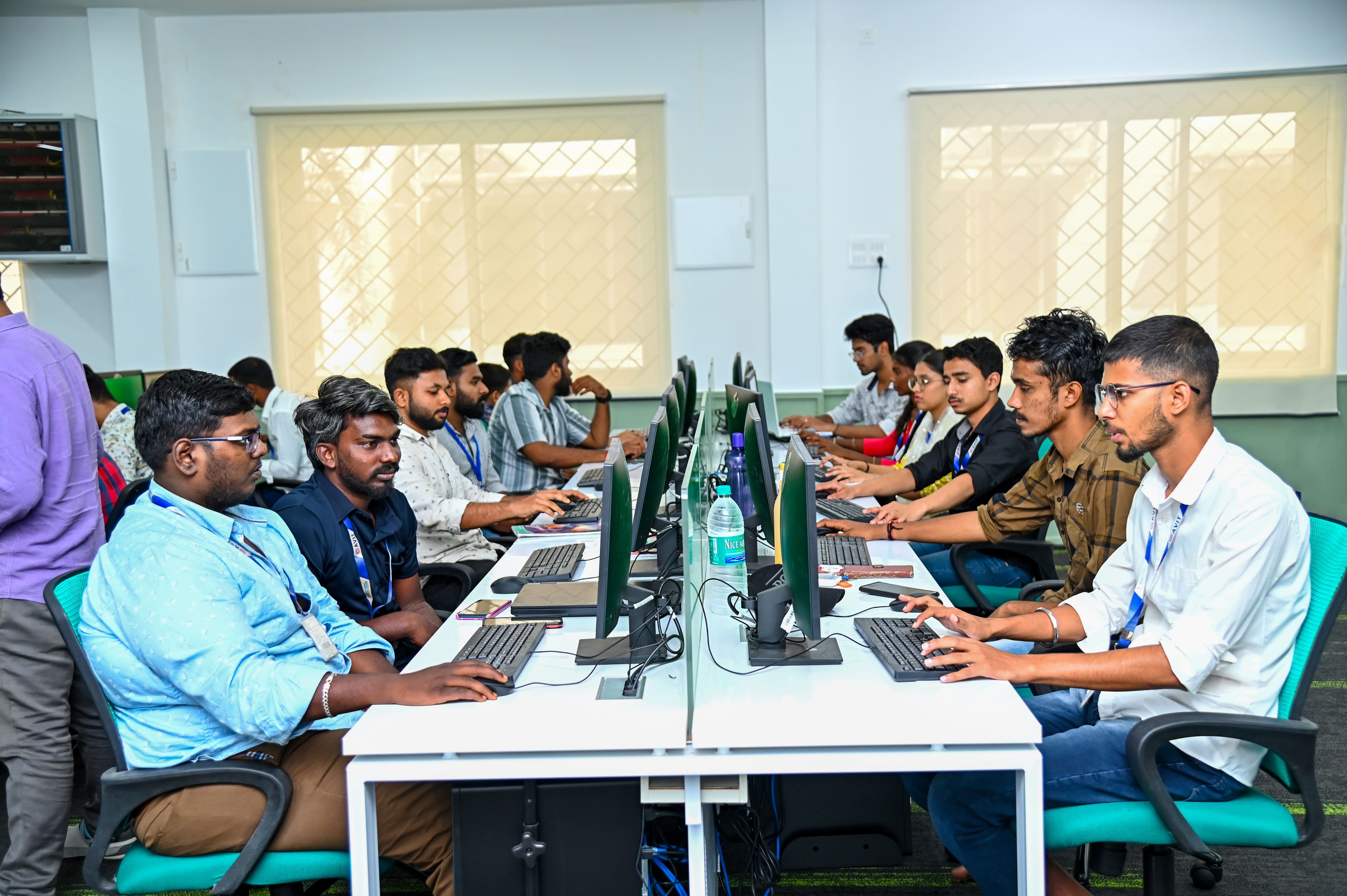
Access cutting-edge facilities including the Intel & NEC Lab, Apple Authorized Training Centre, AI Research Lab, IoT Research Lab, Networking Lab, and Innovation & Entrepreneurship Centres.

Specialized Cyber Security Pathways
Choose specialized pathways and electives in ethical hacking, SOC operations, cloud security, cyber threat intelligence, and emerging technologies to align with your career aspirations.

Research, Innovation & Entrepreneurship
Participate in funded research projects, patents, capture-the-flag (CTF) competitions, hackathons, innovation challenges, startup incubation initiatives, and multidisciplinary security development programs.

Career-Focused Learning
Prepare for high-demand careers as Cyber Security Analysts, Security Engineers, Ethical Hackers, Digital Forensics Experts, SOC Analysts, Information Security Consultants, Researchers, and Entrepreneurs.
WHAT YOU'LL STUDY
Your Four-Year Learning Journey
The programme is structured as a progressive learning experience- from computing fundamentals to advanced cyber security engineering and real-world security operations.

YEAR 1
Computing & Security Foundations
Focus Areas
- C Programming
- Python Programming
- AI in Scientific Research & Education
- Engineering Mathematics
- Communication Skills
- Computing Fundamentals
- Design Thinking Foundations
- Emerging Trends in IT Infrastructure
- Idea Lab
Outcome: Build strong programming and analytical skills while understanding the foundations of secure computing.
YEAR 2
Core Computing & Network Security
Focus Areas
- Data Structures
- Operating Systems
- Database Systems
- Computer Networks
- Computer Architecture
- Cryptography Foundations
Outcome: Understand system-level concepts and the security principles governing modern computing environments.

YEAR 3
Cyber Security Engineering
Focus Areas
- Network Security
- Ethical Hacking
- Digital Forensics
- Secure Software Development
- Cloud Security
- Cyber Threat Intelligence
Outcome: Develop the skills required to identify, prevent, and respond to cybersecurity threats.
YEAR 4
Security Operations & Innovation
Focus Areas
- Advanced Security Electives
- Industry Internship
- Security Auditing
- Research Projects
- Capstone Project
Outcome: Graduate as a cybersecurity professional equipped to protect digital infrastructure and critical information systems.
PATHWAY OPTIONS
Honors, Minors & Specializations
HONORS DEGREE
- Blockchain Technologies
SPECIALIZATIONS
- Cloud Computing
- Quantum Computing
MINOR DEGREE OPTIONS
- Cloud Infrastructure and Services
CAREER OUTCOMES: Cyber Security Analyst | Security Engineer | Ethical Hacker | Digital Forensics Expert | SOC Analyst | Information Security Consultant

PROGRAMME HIGHLIGHTS
What You'll Achieve with Us
Engineering Graduates will be able to:
Apply the knowledge of mathematics, science, engineering fundamentals, and an engineering specialization to the solution of complex engineering problems.
Identify, formulate, review research literature, and analyze complex engineering problems reaching substantiated conclusions using first principles of mathematics, natural sciences, and engineering sciences.
Design solutions for complex engineering problems and design system components or processes that meet the specified needs with appropriate consideration for the public health and safety, and the cultural, societal, and environmental considerations.
Use research-based knowledge and research methods including design of experiments, analysis and interpretation of data, and synthesis of the information to provide valid conclusions.
Create, select, and apply appropriate techniques, resources, and modern engineering and IT tools including prediction and modeling to complex engineering activities with an understanding of the limitations.
Apply reasoning informed by the contextual knowledge to assess societal, health, safety, legal and cultural issues and the consequent responsibilities relevant to the professional engineering practice.
Apply ethical principles and commit to professional ethics and responsibilities and norms of the engineering practice.
Function effectively as an individual, and as a member or leader in diverse / multidisciplinary teams.
Communicate effectively and inclusively within the engineering community and society at large, such as being able to comprehend and write effective reports and design documentation, make effective presentations considering cultural, language, and learning differences.
Apply knowledge and understanding of engineering management principles and economic decision-making and apply these to one's own work, as a member and leader in a team, and to manage projects and in multidisciplinary environments.
Recognize the need for, and have the preparation and ability for i) independent and life-long learning ii) adaptability to new and emerging technologies and iii) critical thinking in the broadest context of technological change.
Graduating Students of Computer Science and Engineering programme will be able to:
-
PSO 1
Demonstrate understanding of the principles and working of the hardware and software aspects of computer systems.
-
PSO 2
Understand, analyze and develop computer programs in the areas related to algorithms, system software, multimedia, web design, big data analytics and networking for efficient design of computer-based systems of varying complexity.
-
PSO 3
Apply standard Software Engineering practices and strategies in software project development using open-source programming environment to deliver a quality product for business success and to be acquainted with the contemporary issues, latest trends in technological development and thereby innovate new ideas and solutions to existing problems.
Implement fundamental domain knowledge of core courses for developing effective computing solutions by incorporating creativity and logical reasoning.
Graduate will establish effective professionals by solving real world problems using investigative and analytical skills along with the knowledge acquired in the field of Computer Science and Engineering.
Graduate will prove ability to work and communicate effectively as a team member and/or leader to complete the task with minimal resources, meeting deadlines.
Graduate will demonstrate his/her ability to adapt to rapidly changing environment in advanced areas of Computer Science and scale new heights in their profession through lifelong learning.
DR. M. NITHYA PROFESSOR & HOD, DEPARTMENT OF CSE, VMKV ENGINEERING COLLEGE, SALEM
DR. V. AMIRTHALINGAM PROFESSOR, VMKV ENGINEERING COLLEGE, SALEM
DR. S. SENTHILKUMAR PROFESSOR, VMKV ENGINEERING COLLEGE, SALEM
DR. S. BALAKRISHNAN, PROFESSOR & HOD, ARUPADAI VEEDU INSTITUTE OF TECHNOLOGY, PAIYANOOR
DR. MUTHUKUMARAN M PROFESSOR, ARUPADAI VEEDU INSTITUTE OF TECHNOLOGY, PAIYANOOR
DR. K. RAMU PROFESSOR, ARUPADAI VEEDU INSTITUTE OF TECHNOLOGY, PAIYANOOR
DR. M. RAJESH ASSOCIATE PROFESSOR DEPARTMENT OF CSE, ARUPADAI VEEDU INSTITUTE OF TECHNOLOGY, PAIYANOOR
DR. S. RAJANARAYANAN ASSOCIATE PROFESSOR, DEPARTMENT OF CSE, VMKV ENGINEERING COLLEGE, SALEM
DR. R. SHOBANA ASSISTANT PROFESSOR (GRADE II), DEPARTMENT OF CSE, AARUPADAI VEEDU INSTITUTE OF TECHNOLOGY, PAIYANOOR
MR. S. LOGANATHAN ASSISTANT PROFESSOR DEPARTMENT OF CSE, VMKV ENGINEERING COLLEGE, SALEM
DR. N. RADHIKA PROFESSOR, DEPARTMENT OF CSE, AMRITA SCHOOL OF COMPUTING, AMRITA VISHWA VIDYAPEETHAM COIMBATORE - 641 112
DR. USHA BATRA PROFESSOR, DEPARTMENT OF CSE, DEAN CORPORATE RELATIONS AND ENGAGEMENT SHRI VISHWAKARMA SKILL UNIVERSITY, HARYANA (STATE GOVERNMENT UNIVERSITY)
 CAREER OPPORTUNITIES
Where Will Your Degree Take You?
From Ethical Hacking and Network Security to Digital Forensics, SOC Operations, Cloud Security, Threat Intelligence, Research, and Entrepreneurship, an AVIT CSE (Cyber Security) degree opens pathways to some of the world's fastest-growing and highest-paying careers.

Cyber Security Analyst
Monitor, detect, and analyze security threats, investigate incidents, and strengthen the security posture of organizations and critical infrastructure.

Security Engineer
Design, implement, and maintain secure systems, networks, and applications that protect organizations against evolving cyber attacks.

Ethical Hacker
Perform penetration testing and vulnerability assessments to identify and remediate security weaknesses before attackers can exploit them.

Digital Forensics Expert
Investigate cybercrime, recover and analyze digital evidence, and support legal and incident-response processes with forensic expertise.
SOC Analyst
Operate within a Security Operations Centre to continuously monitor, triage, and respond to security alerts and protect enterprise assets in real time.
Information Security Consultant
Advise organizations on security strategy, risk management, compliance, audits, and the design of resilient information security programs.
LABORATORIES & FACILITIES
Learn in Industry-Grade Labs
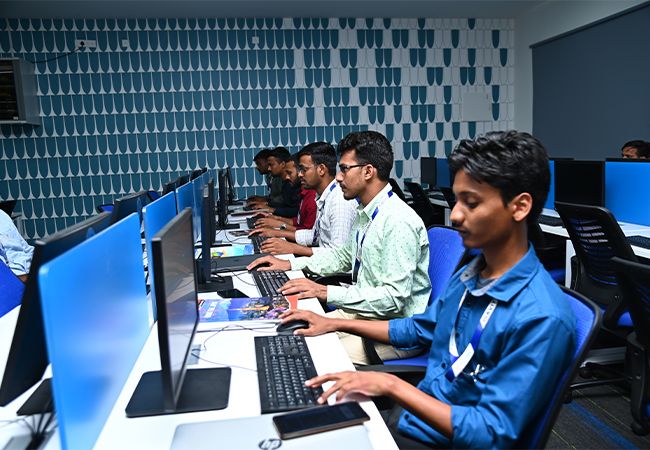
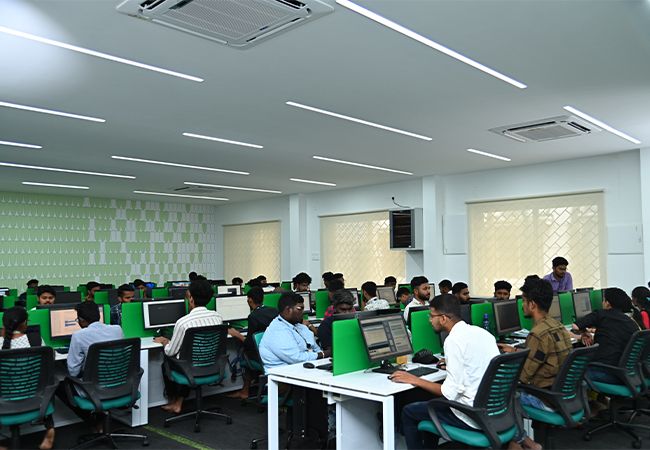
IoT Research Lab
i5 Processor systems
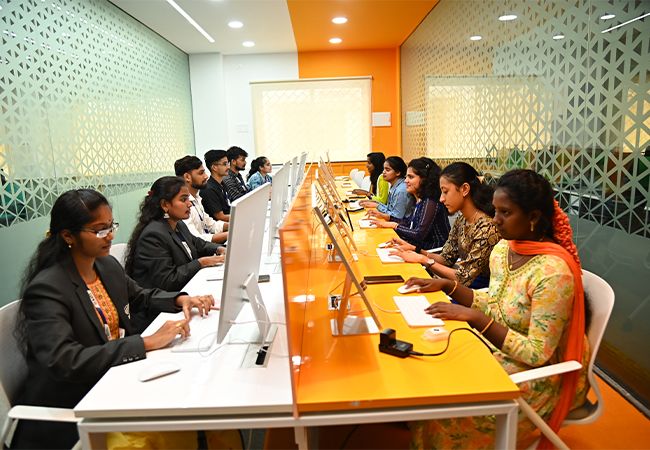
AI Research Lab
i5 Processor systems
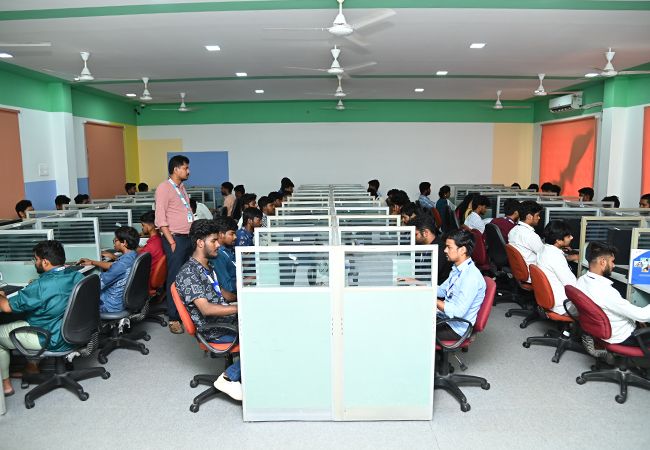
Apple Authorised Training Centre
Apple-certified environment
Networking Lab
Mixed fleet i5, i3, Dual Core
INTERNSHIPS
Build Your Future with Industry-Integrated Internship Programs
At AVIT, internships connect classroom learning with real-world industry exposure.

Assured Internship via VEmerge+
Assured Internship & Placement, 7+7 Certifications, Capstone Project

HCLTech Industry Project cum Internship
Industry-ready project, NCVET certificate, Placement Assistance
XTIC XR Technology Internship
Internship & Placement Support, AR/VR/XR projects, Capstone Project
UC Berkeley / Intel Fice
UC Berkeley Micro Accelerator Program
Real-world problems, group projects, enhanced technical skills
RELATED PROGRAMMES
Explore Other Academic Opportunities
Beyond the B.E. CSE (Cyber Security) programme, AVIT offers the core B.E. CSE programme and specialised pathways in AI & ML and Data Science- each designed for high-demand technology careers.


FREQUENTLY ASKED QUESTIONS
Common Questions About B.E. CSE (Cyber Security)
AVIT CSE (Cyber Security) combines an industry-aligned curriculum, hands-on security labs, ethical hacking and forensics training, internships, certifications, research opportunities, CTF competitions, and strong placement support to prepare students for successful cyber security careers.
Students learn ethical hacking, network security, digital forensics, cryptography, secure software development, cloud security, cyber threat intelligence, and Security Operations Centre (SOC) practices, aligned with emerging industry demands.
Students benefit from collaborations with Intel, NEC, HCLTech, and XTIC (IIT Madras), along with security certifications, internships, industry projects, expert talks, and hands-on learning experiences.
Graduates can pursue careers as Cyber Security Analysts, Security Engineers, Ethical Hackers, Digital Forensics Experts, SOC Analysts, Information Security Consultants, Researchers, and Entrepreneurs.
Yes. Students actively participate in internships, capture-the-flag (CTF) competitions, national and international hackathons, research projects, patent development, innovation challenges, and startup incubation programs.
The department provides access to the Intel Unnati & NEC Lab, Apple Authorized Training Centre, AI Research Lab, IoT Lab, Networking Lab, advanced computing facilities, and innovation-focused learning spaces.
Yes. Students can enhance their academic profile through an Honors Degree in Blockchain Technologies, specializations in Cloud Computing and Quantum Computing, and a Minor in Cloud Infrastructure and Services, based on curriculum regulations.
AVIT offers placement training, aptitude preparation, hands-on security practice, mock interviews, industry mentoring, internships, and recruitment opportunities with leading product and service-based companies.
Absolutely. The programme prepares students for higher education, research careers, postgraduate studies, and doctoral programmes in cyber security and computing in India and abroad.
Students can apply through the AVIT admissions portal or contact the admissions office for guidance on eligibility, application procedures, scholarships, and programme selection.
ADMISSIONS OPEN
Ready to Defend the Digital Future?
As organizations and infrastructure move online, the demand for skilled cyber security engineers has never been greater. The B.E. CSE (Cyber Security) programme at AVIT provides the foundation, industry exposure, and technical depth you need to build a lasting career protecting digital systems and critical information.