




Department of Electrical and Electronics Engineering
Renewable Energy, Power Electronics, and Power System Automation- the Centre of Excellence for Solar Energy, industry-grade labs, and strong placement outcomes
DEPARTMENT OVERVIEW
Powering Future-Ready Electrical & Electronics Engineers
Established in 1998, the Department of Electrical and Electronics Engineering at AVIT is one of Chennai's leading EEE departments, offering undergraduate and postgraduate programmes with application-oriented focus on Renewable Energy, Power Electronics, and Power System Automation.
Home to the Centre of Excellence for Solar Energy- a 126 kWp solar plant generating 600 units a day- and supported by research grants from MNRE, DST, MHRD, and IIT Hyderabad, learning at AVIT goes well beyond the classroom and into real-world energy innovation.


THE AVIT ADVANTAGE
What Makes EEE at AVIT Different?

Industry-Aligned Specialization Pathways
Go beyond traditional Electrical Engineering with specialized pathways in Renewable Energy, Power Electronics, Power Systems, Automation & Control, Embedded Systems, Electric Vehicles, and Smart Grid technologies, aligned with future energy careers.

Industry-Integrated Learning Ecosystem
Learn through internships, industry projects, expert sessions, certifications, hackathons, and real-world problem-solving experiences supported by leading power, energy, and electronics industry partners.
Advanced Technology Labs
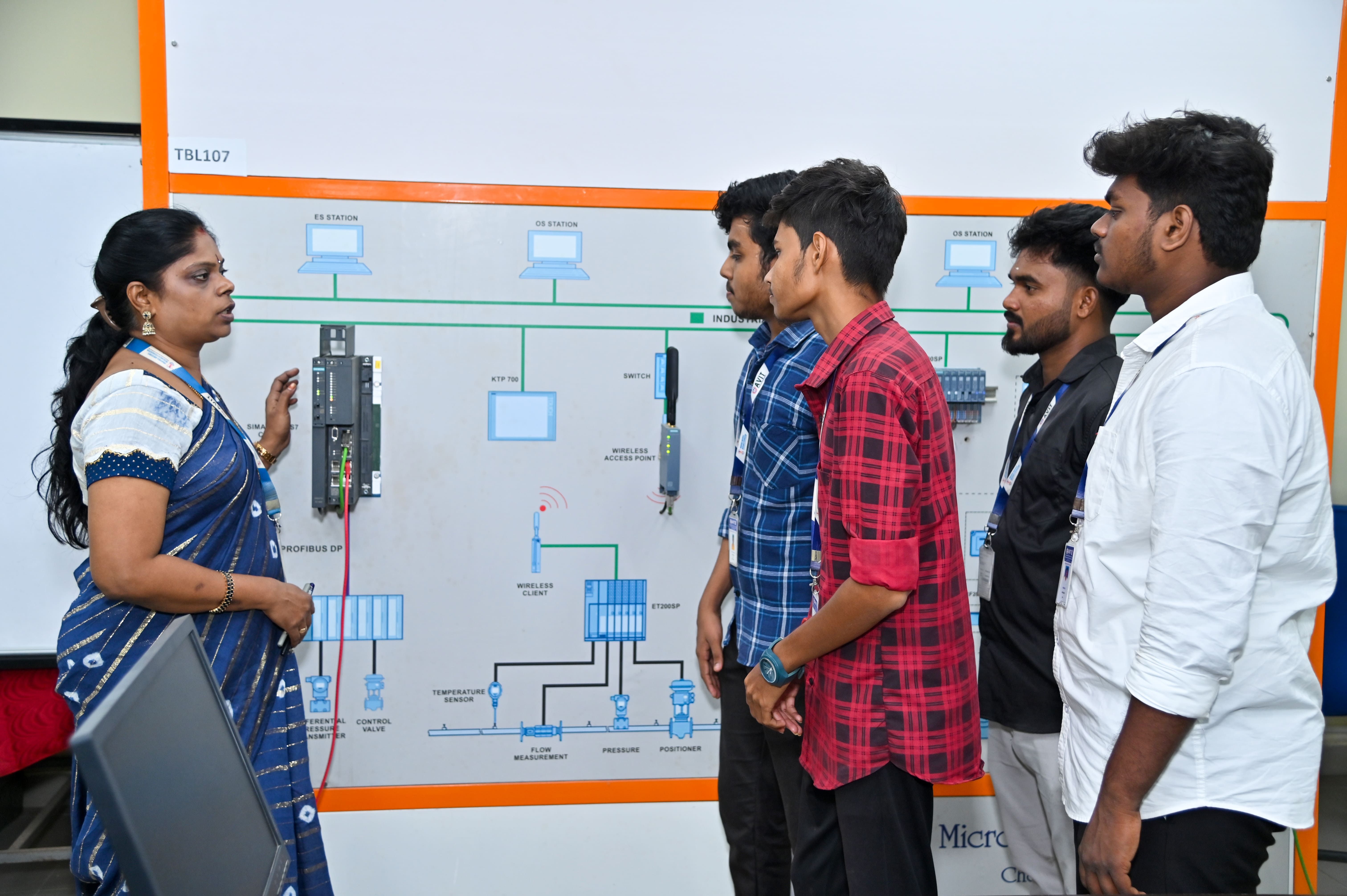
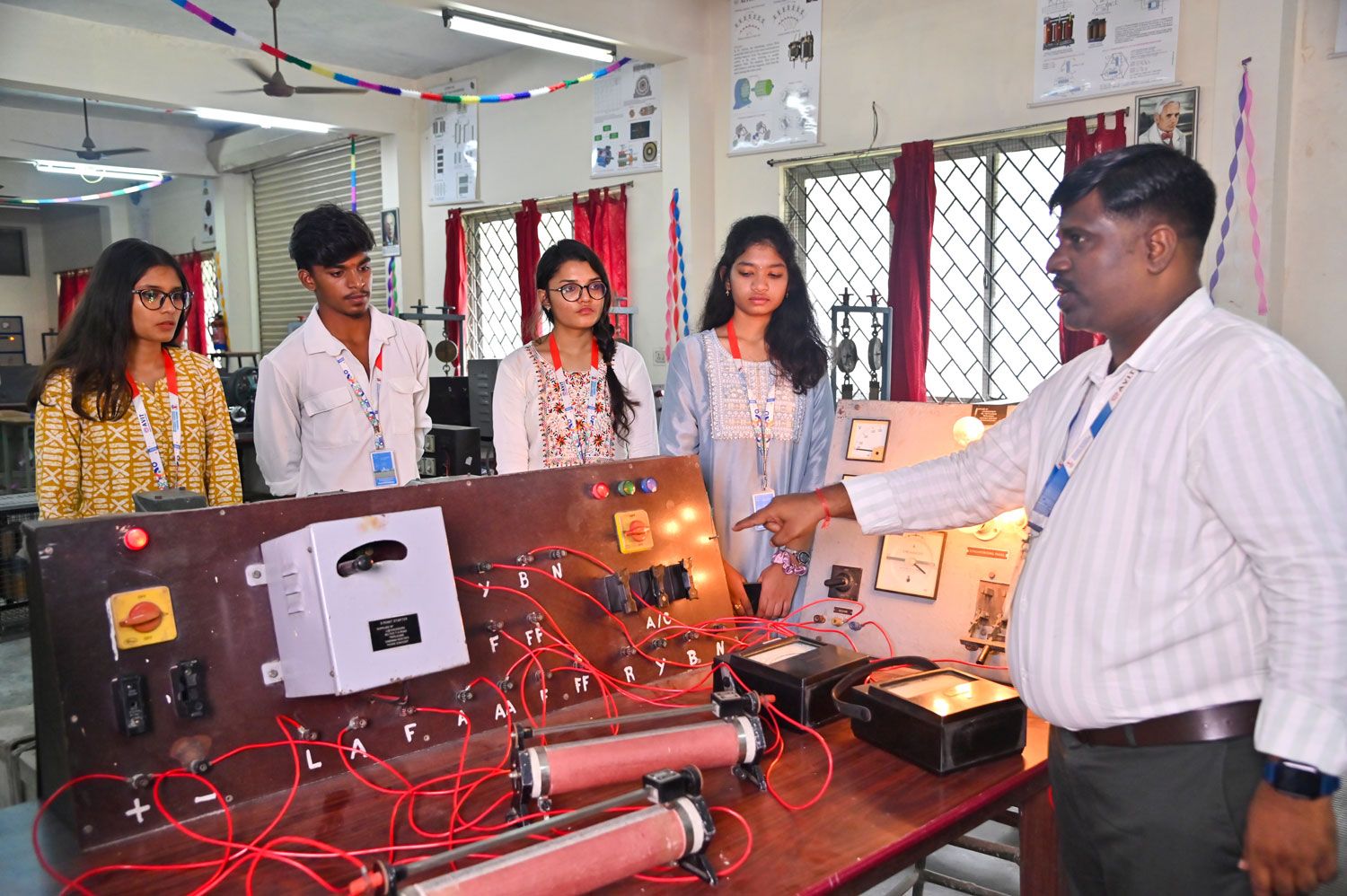
Gain hands-on experience in the Centre of Excellence for Solar Energy, Power Electronics Lab, Electrical Machines Lab, Power Systems Simulation Lab, Renewable Energy Lab, and Embedded Systems Lab.

Research, Patents & Innovation Culture
Students actively participate in research projects, publications, patent development, innovation challenges, startup initiatives, and national-level competitions in energy and electronics.
Honors, Minors & Specialization Opportunities
Enhance your profile through Honors Degrees, Minor Degrees, and Emerging Technology Specializations, enabling multidisciplinary learning and career flexibility.

Career-Focused Curriculum
A curriculum designed around industry demands, combining technical expertise, professional skills, certifications, project-based learning, and career readiness.

Hackathons & Competitive Learning
Regular participation in national and international hackathons, innovation challenges, and technology competitions fosters creativity and practical problem-solving.

Future-Ready Career Outcomes
Graduate prepared for careers in Power Systems, Renewable Energy, Power Electronics, Automation, Electric Vehicles, Embedded Systems, Research, Product Development, and Entrepreneurship.

Strong Mentorship & Student Support
Learn from experienced faculty, industry mentors, researchers, and innovators committed to guiding students toward academic and professional success.
 PROGRAMMES OFFERED
Start Your Learning Journey
B.E. EEE
 4 Years
4 Years
B.E. Electrical and Electronics Engineering
Regular – 4 Years
Build strong foundations in electrical machines, power systems, power electronics, control systems, renewable energy, and embedded technologies with industry-integrated learning.
Career Paths
Power Systems Engineer | Electrical Design Engineer | Renewable Energy Engineer | Automation & Control Engineer
B.E. EEE
3 Years
3 Years
B.E. Electrical and Electronics Engineering
Lateral Entry – 3 Years
A 3-year pathway for diploma holders entering directly into the second year, covering electrical machines, power systems, power electronics, control systems, and renewable energy with industry-integrated learning.
Career Paths
Power Systems Engineer | Electrical Design Engineer | Renewable Energy Engineer | Automation & Control Engineer
B.E. EEE
3 Years
3 Years
B.E. Electrical and Electronics Engineering
BE Working Professionals – 3 Years
A flexible 3-year degree enabling working professionals to earn a B.E. in Electrical and Electronics Engineering while continuing their careers, with the same industry-aligned curriculum and outcomes.
Career Paths
Power Systems Engineer | Electrical Design Engineer | Renewable Energy Engineer | Automation & Control Engineer
M.E. PSE
2 Years
2 Years
M.E. Power Systems Engineering
Regular – 2 Years
A full-time postgraduate programme designed to deepen expertise in power systems, power generation and distribution, smart grids, renewable energy integration, and research methodologies through structured coursework and independent research projects.
Career Paths
Power Systems Engineer | Research Engineer | Smart Grid Specialist | Technical Lead | Ph.D. Scholar
Ph.D. EEE
3–5 Years
3–5 Years
Full Time
Engage in full-time advanced research in cutting-edge domains including renewable energy, power electronics, power systems, automation, electric vehicles, and emerging energy technologies under expert faculty guidance.
Career Paths
Research Scientist | Professor & Academic Faculty | Senior R&D Engineer | Innovation Specialist | Post-Doctoral Researcher
Ph.D. EEE
External / Internal
External / Internal
Part Time
Pursue doctoral research alongside professional or academic commitments through external and internal research tracks, available for industry practitioners and academic professionals.
Career Paths
Industry Research Scientist | Senior Technical Expert | Academic Faculty | R&D Specialist | Innovation Leader
OUR FLAGSHIP INITIATIVE
VEmerge+ Industry Integrated Programmes
Developed in Collaboration With Leading Industry Partners

CAREER OPPORTUNITIES
Where Will Your Degree Take You?
A degree in Electrical and Electronics Engineering from AVIT opens doors across power systems, renewable energy, power electronics, automation, electric vehicles, and electronics industries worldwide.
With strong foundations in electrical machines, power systems, control, and industry-integrated learning, graduates can pursue opportunities across multiple energy and electronics sectors.
Power Systems Engineer
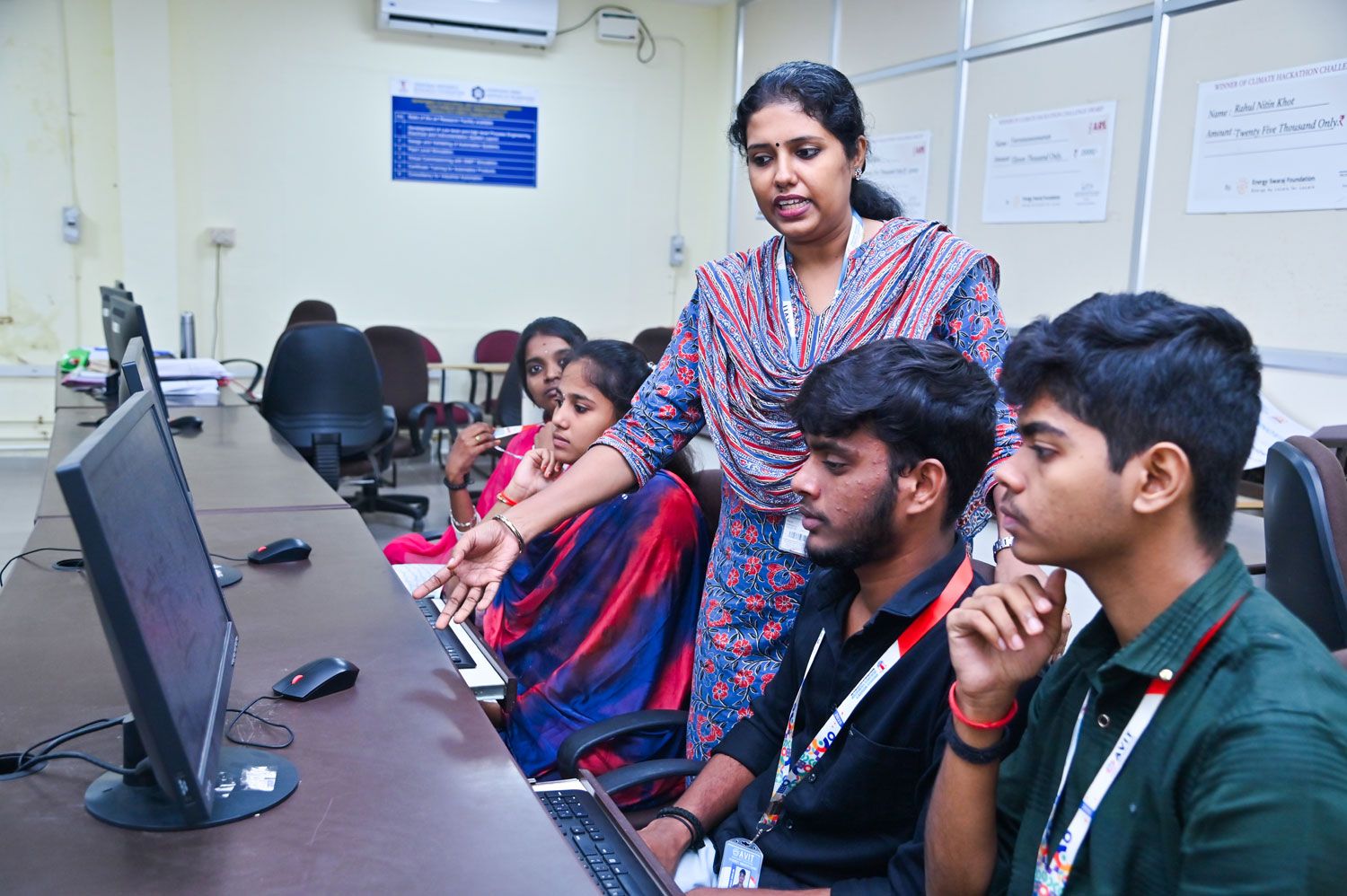
Designs, analyses, and maintains electrical power generation, transmission, and distribution networks for reliable energy delivery.
Renewable Energy Engineer
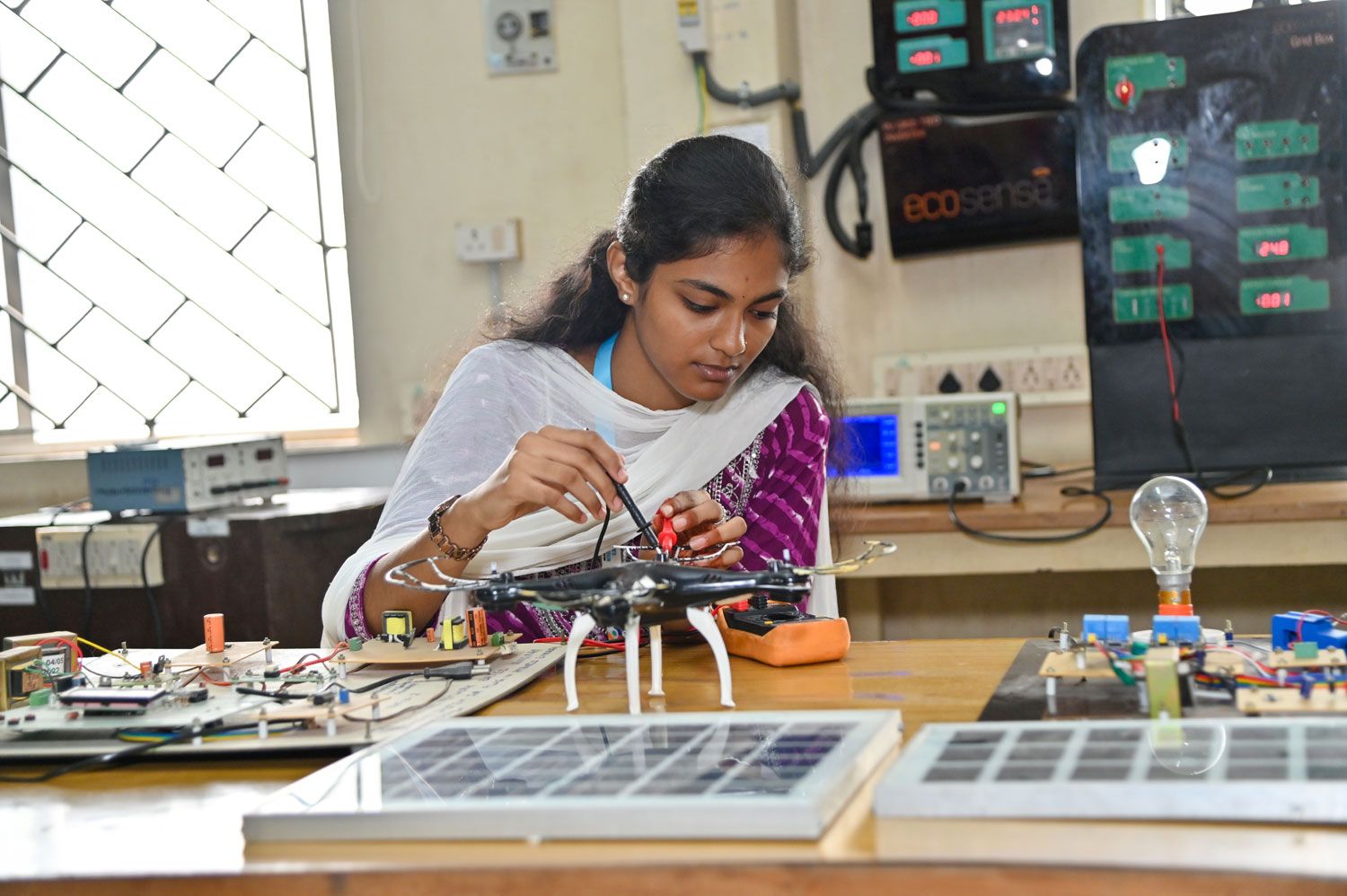
Develops solar, wind, and energy storage systems to drive sustainable and clean power generation.
Power Electronics Engineer
Designs converters, inverters, and drives for efficient energy conversion and control across applications.
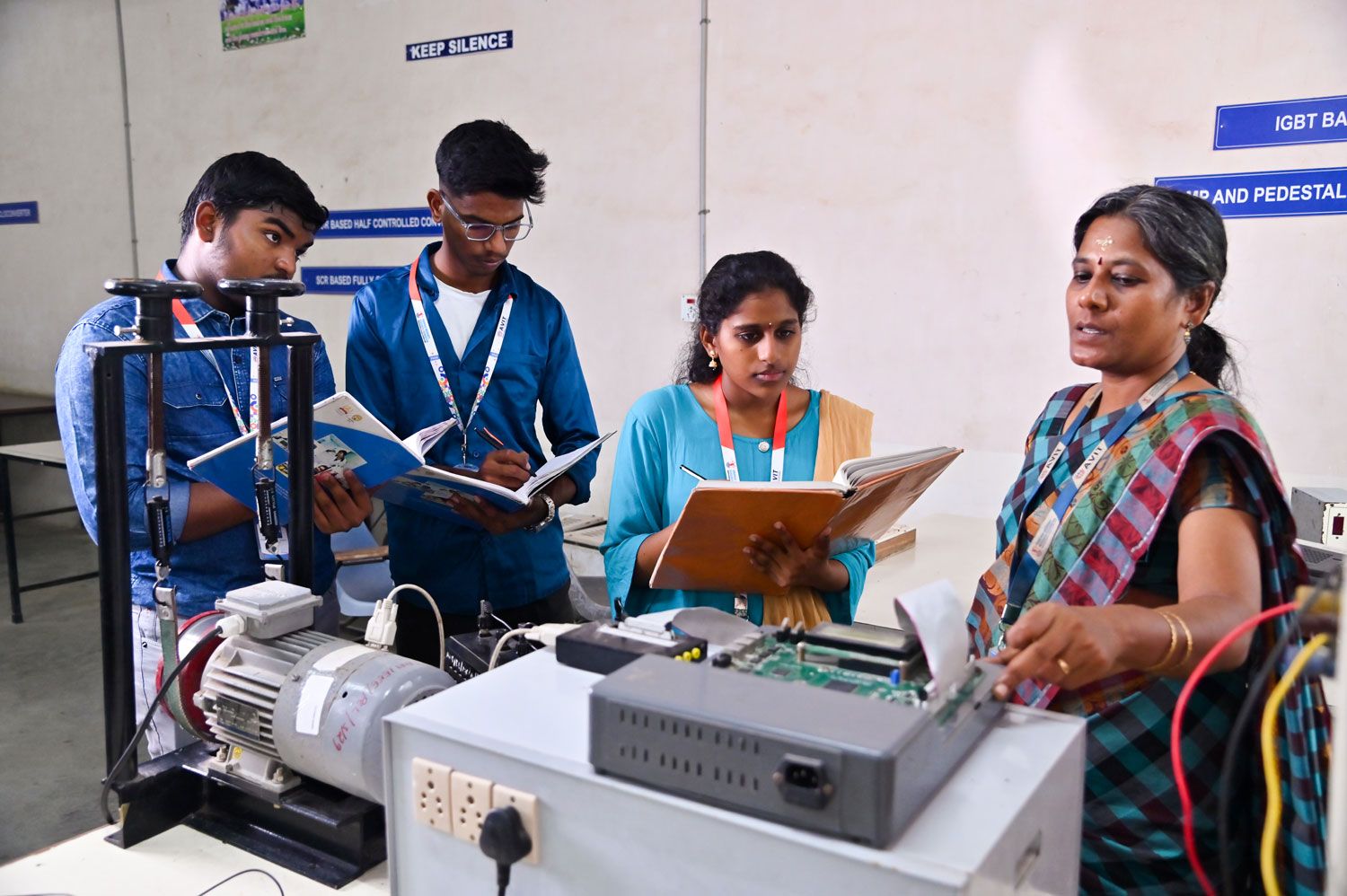
Automation & Control Engineer
Builds and integrates PLC, SCADA, and control systems to automate industrial and energy processes.
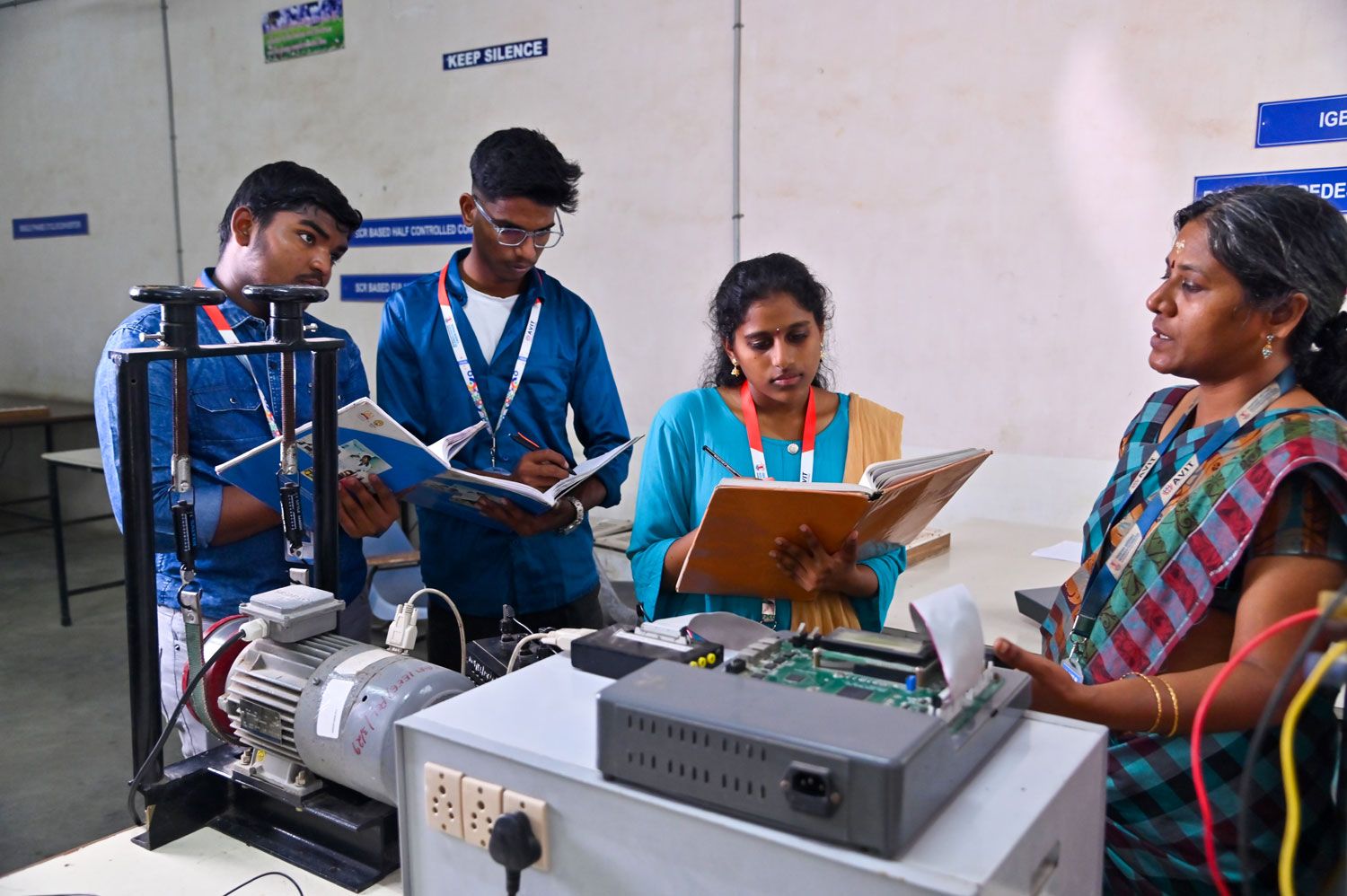
Electric Vehicle (EV) Engineer
Develops EV powertrains, battery management systems, and charging infrastructure for next-generation mobility.
Career Opportunities across Leading Global Companies












RESEARCH & INNOVATION
Advancing Knowledge Through Research and Development
Students and faculty actively engage in applied research, technology development, sustainable energy engineering, and industry-focused innovation.
Research Areas
Renewable Energy, Power Electronics, Power System Automation, Electric Vehicles, and Smart Grid- applied research aligned with industry and national energy priorities.
Explore

Publications & Patents
Faculty and students publish in leading journals and file patents in renewable energy, power electronics, and energy systems.
Explore

Collaborations
Partnerships with leading industries and institutions through MoUs, joint labs, and collaborations with MNRE, DST, MHRD, and IIT Hyderabad.
Explore
Seed Funding
Platform to nurture early-stage research and innovation with mentorship, prototyping support, and incubation pathways.
Explore
Research Grants
Funded research projects supported by MNRE, DST, MHRD, and IIT Hyderabad driving impactful research for faculty and students.
Explore

Research Facilities
Centre of Excellence for Solar Energy, Power Electronics Lab, Renewable Energy Lab, and industry-grade facilities that foster discovery and academic excellence.
Explore
ACHIEVEMENTS
Recognising Innovation and Excellence
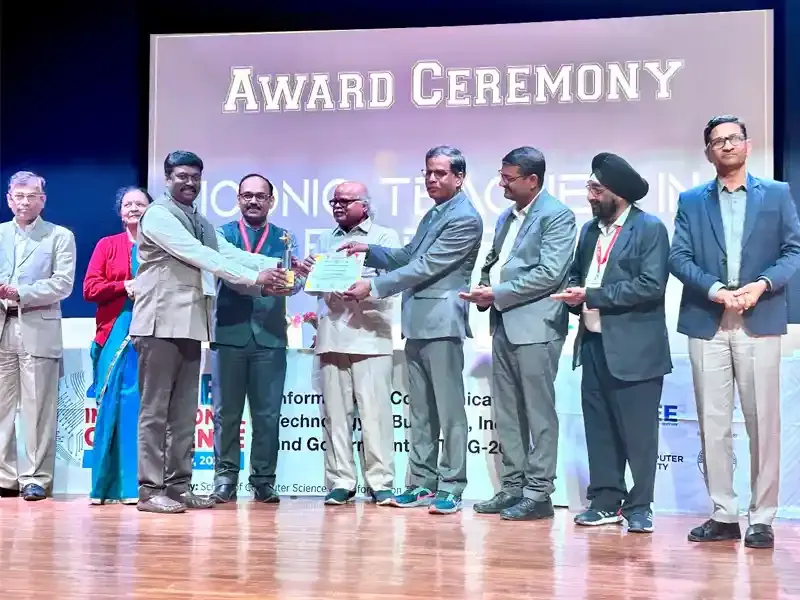
Our students actively participate in national and international technical events, innovation challenges, and project expos, consistently bringing recognition to the department.
The department encourages students to showcase their creativity, technical skills, and problem-solving abilities through competitions, exhibitions, and industry-driven initiatives.
-
Innovation Challenges 2K24
Recognition for innovative engineering solutions and project development.
-
Shaastra Tech Fair 2023
Participation and achievement in one of the region's premier technology events.
-
Project Expo 23
Showcasing student-led engineering projects and practical innovations.


INTERNSHIPS
Build Real Experience Before You Graduate
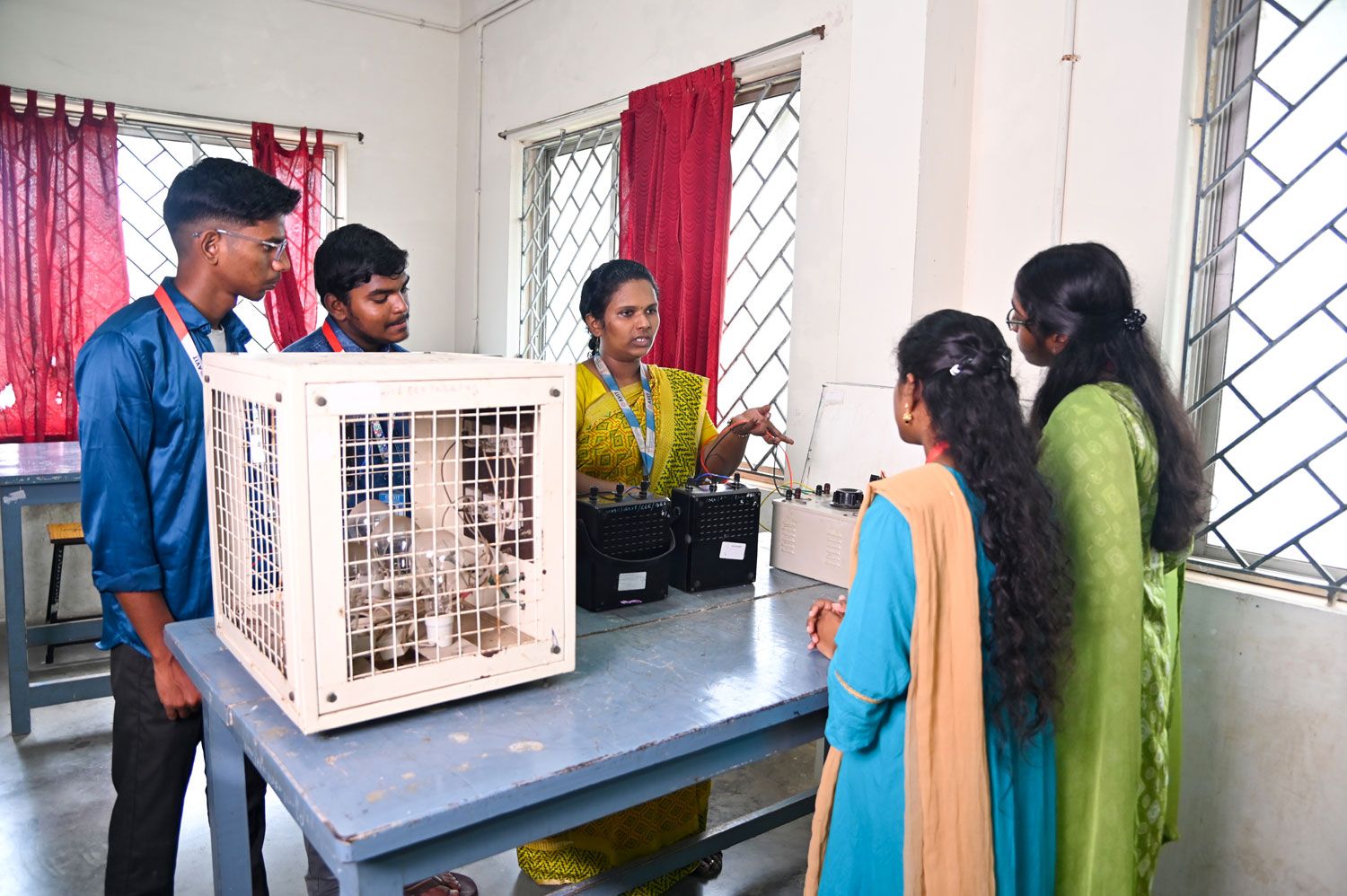
At AVIT, internships are built into the programme through our industry partnerships and the Centre of Excellence for Solar Energy- giving students assured industry exposure before graduation.
Schneider Electric
Assured Internship via Industry Programme
Assured Internship & Placement, Industry Certifications, Capstone Project
Siemens
Industrial Automation Project cum Internship
Industry-ready project, PLC & SCADA training, Placement Assistance
MNRE / Solar Energy CoE
Solar Energy Internship
126 kWp solar plant projects, Renewable Energy training, Capstone Project
IIT Hyderabad Collaboration
Research-Driven Internship
Real-world problem solving, group projects, enhanced technical skills
PLACEMENT HIGHLIGHTS
Career Opportunities with Leading Core, Product & Service Companies
AVIT EEE graduates build successful careers with leading core engineering, power, energy, and electronics companies as well as global technology and service organizations through industry-focused learning, internships, career readiness training, and strong placement support.
100+
Recruiting Companies
Leading national and multinational organizations participate in campus recruitment, offering opportunities across power systems, renewable energy, power electronics, automation, electric vehicles, and emerging technologies.Core & Product Recruiters
Power, Energy & Electronics Innovators
Build cutting-edge power, energy, automation, and electronics products and solutions with some of the world's most innovative engineering companies.Featured Recruiters: Siemens, Schneider Electric, ABB, Bosch, Ashok Leyland, Amphenol, L&T and more.
Service-Based Recruiters
Global Technology & Consulting Leaders
Work on enterprise-scale projects, digital transformation initiatives, embedded solutions, consulting, and technology solutions for global clients.Featured Recruiters: Infosys, TCS, Cognizant, Accenture, HCLTech, Hexaware and more.
Top Recruiters
 Hexaware
 Q Spider
 GK Enterprises
Palle Technologies
 Sutherland
 Infinite
 DeltaX
 Amazon
Getstamp
Amphenol
Ashok Leyland
Top Career Outcomes
Power Systems Engineer | Electrical Design Engineer | Power Electronics Engineer | Renewable Energy Engineer | Automation & Control Engineer | Embedded Systems Engineer | Electric Vehicle Engineer | Electrical Maintenance Engineer | Research Engineer | Entrepreneur
Placement Preparation & Career Readiness
Career Development Training
Structured training in aptitude, technical concepts, communication, quantitative reasoning, and problem-solving to prepare students for recruitment processes.
Mock Interviews & Assessments
Practice technical interviews, HR interviews, technical assessments, and group discussions through simulated recruitment activities.
Resume & Professional Branding
Build industry-ready resumes, portfolios, LinkedIn profiles, project portfolios, and professional digital identities.
CLUBS & ORGANIZATIONS
Join vibrant clubs to explore passions and build leadership
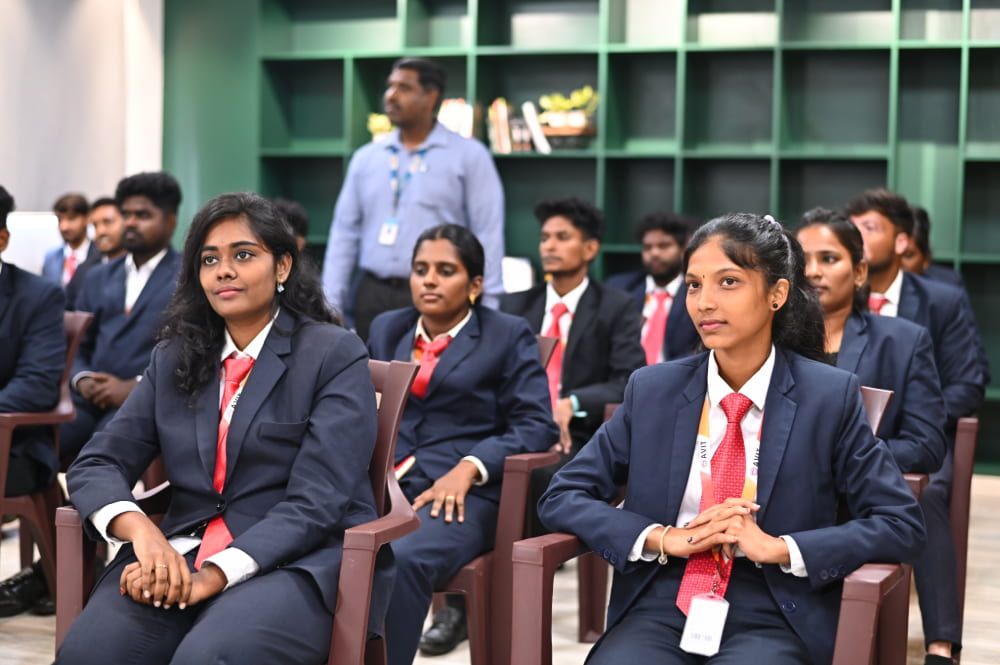
Our student-led clubs provide opportunities to develop technical expertise, leadership skills, innovation mindset, teamwork, and industry exposure beyond the classroom.
Learn. Lead. Inspire.
AI & Machine Learning Club
Explore the latest in AI, ML, and data science through workshops, coding challenges, and collaborative projects.
Coding Club
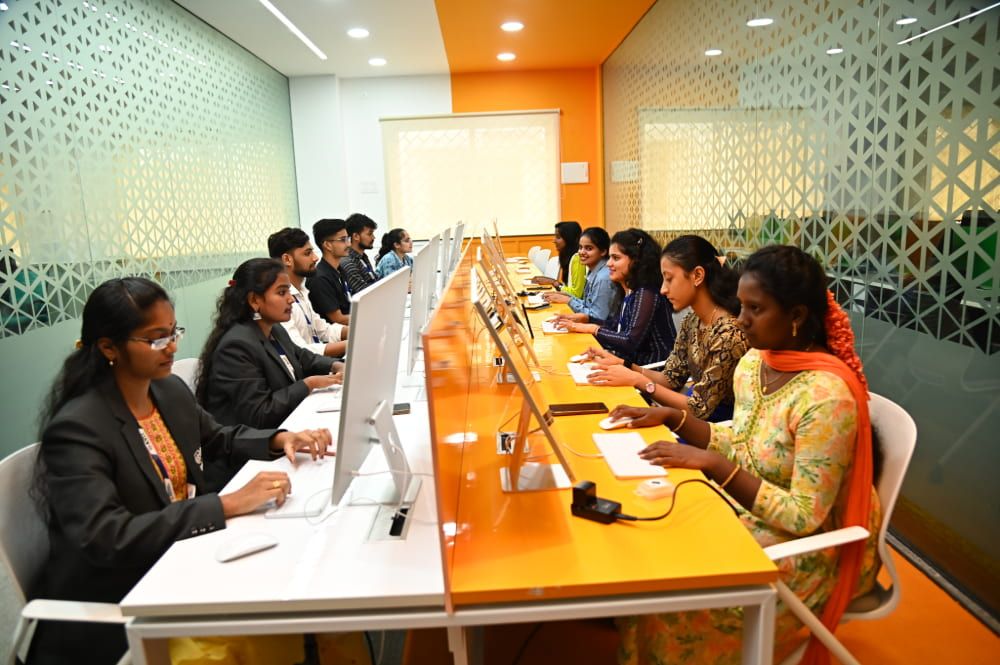
Sharpen your programming skills with peer-led coding sessions, hackathons, and competitions.
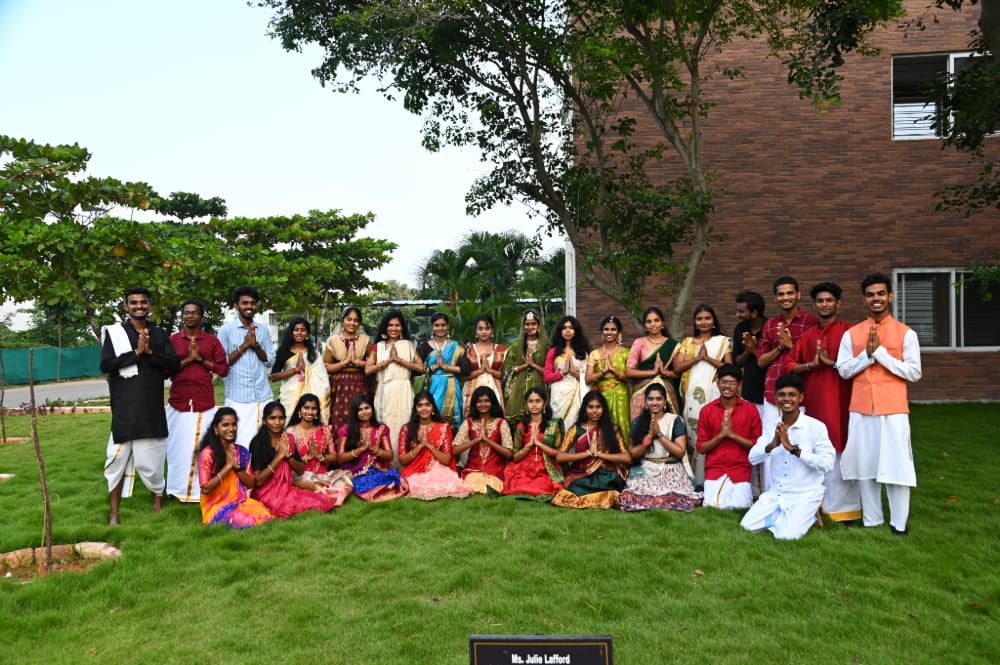
Innovation Cell
Turn your tech ideas into reality! IEC empowers students with mentorship, start-up guidance, and opportunities.
FACULTY & LEADERSHIP
Our Faculty Team & Department Leadership
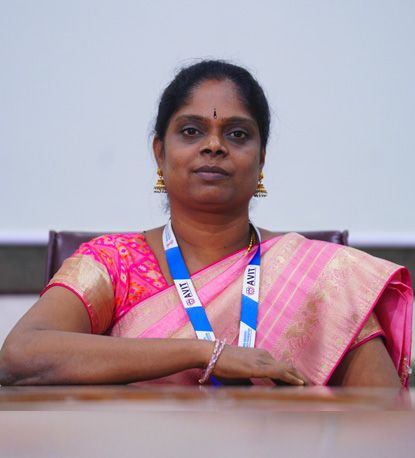
Head of Department
Dr. L. Chitra
Professor and Head
As the Head of Department, I am proud of our long-standing commitment to excellence in education and research. Our department, established in 1998, offers cutting-edge programmes in Renewable Energy, Power Electronics, and Automation, supported by state-of-the-art facilities and a dedicated faculty.

NEWS & EVENTS
Campus Pulse
Stay updated with the latest happenings, achievements and activities across AVIT.
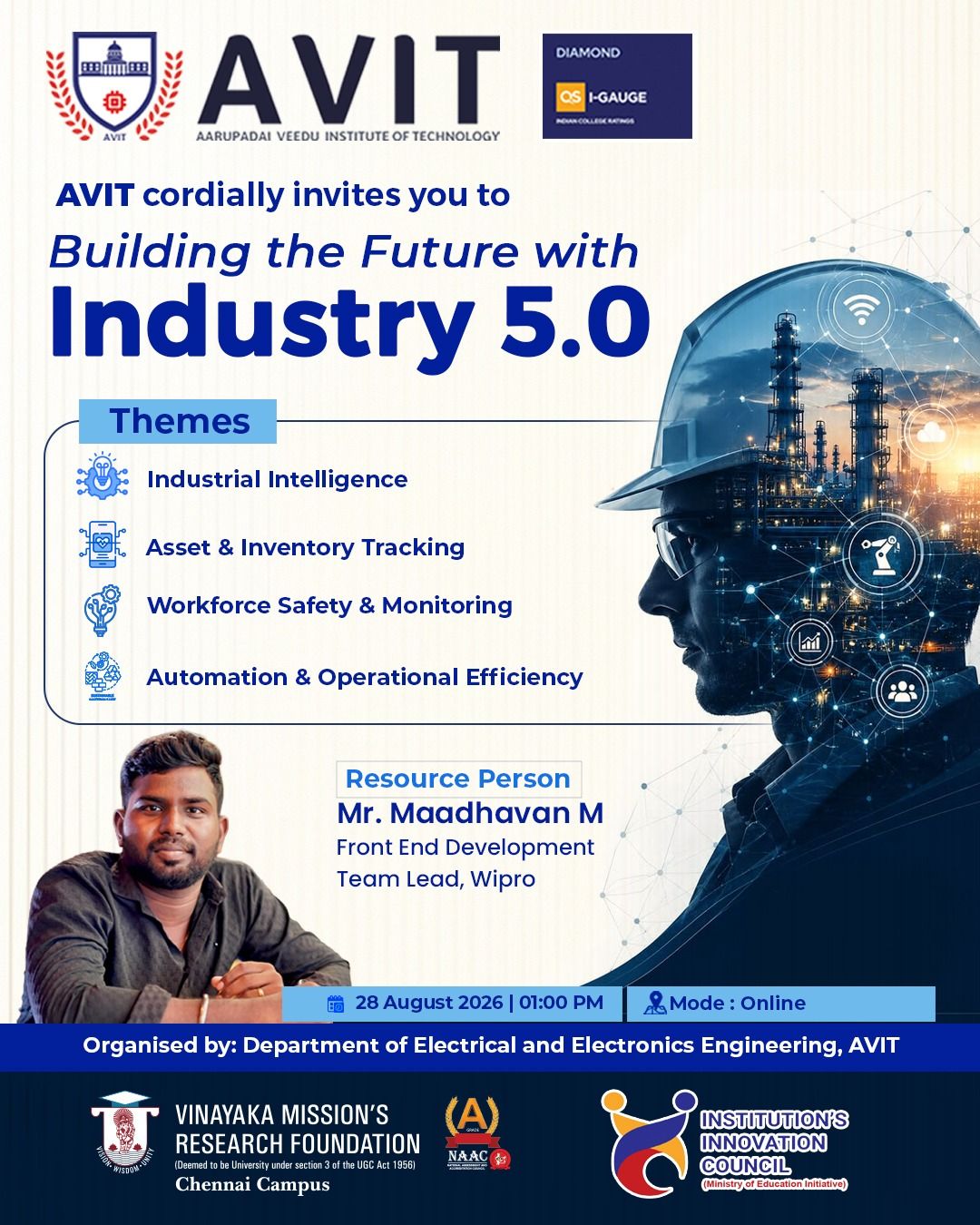
Building the Future with Industry 5.0
28th August 2026
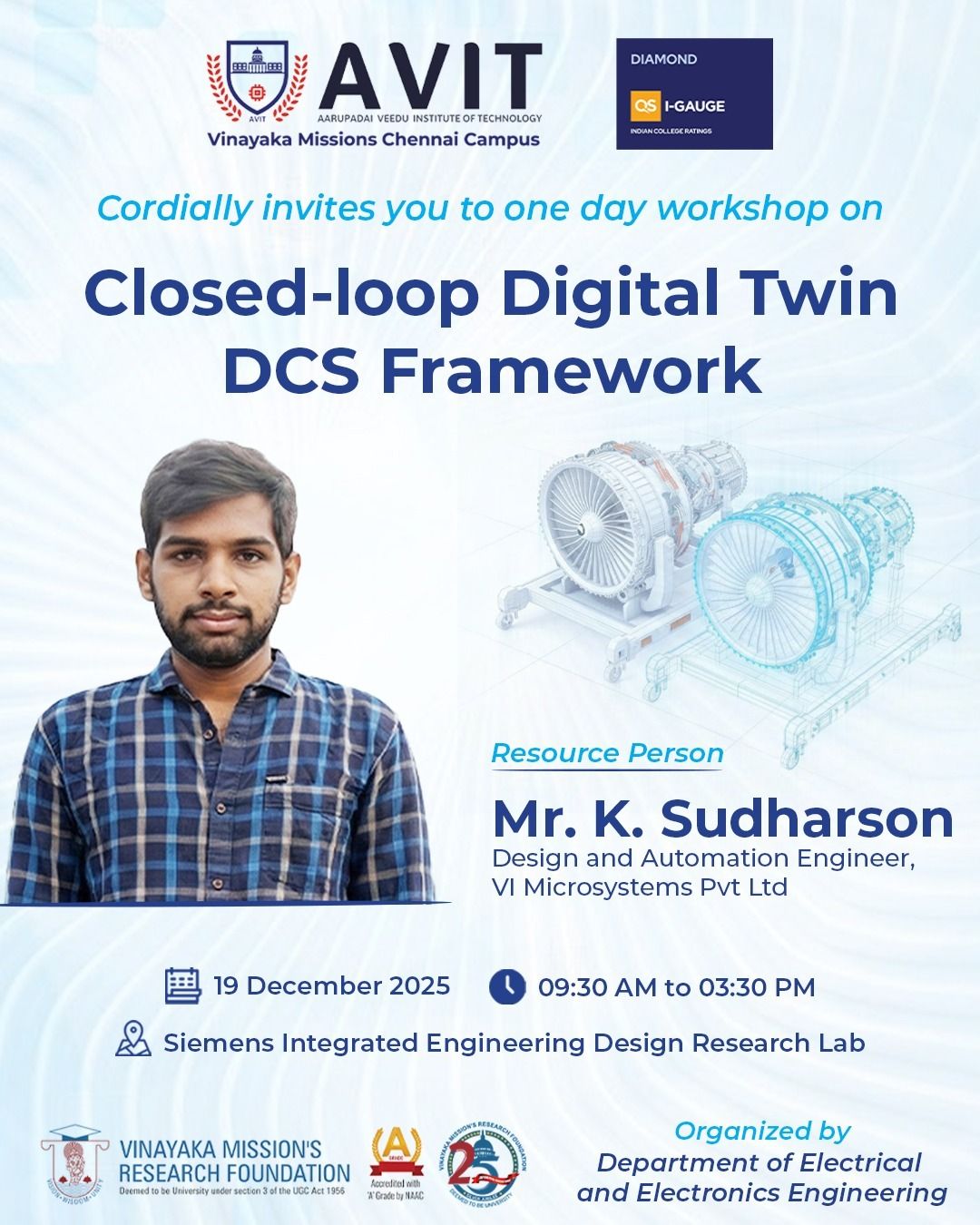
Workshop on Closed-loop Digital Twin DCS Framework
19th December 2025
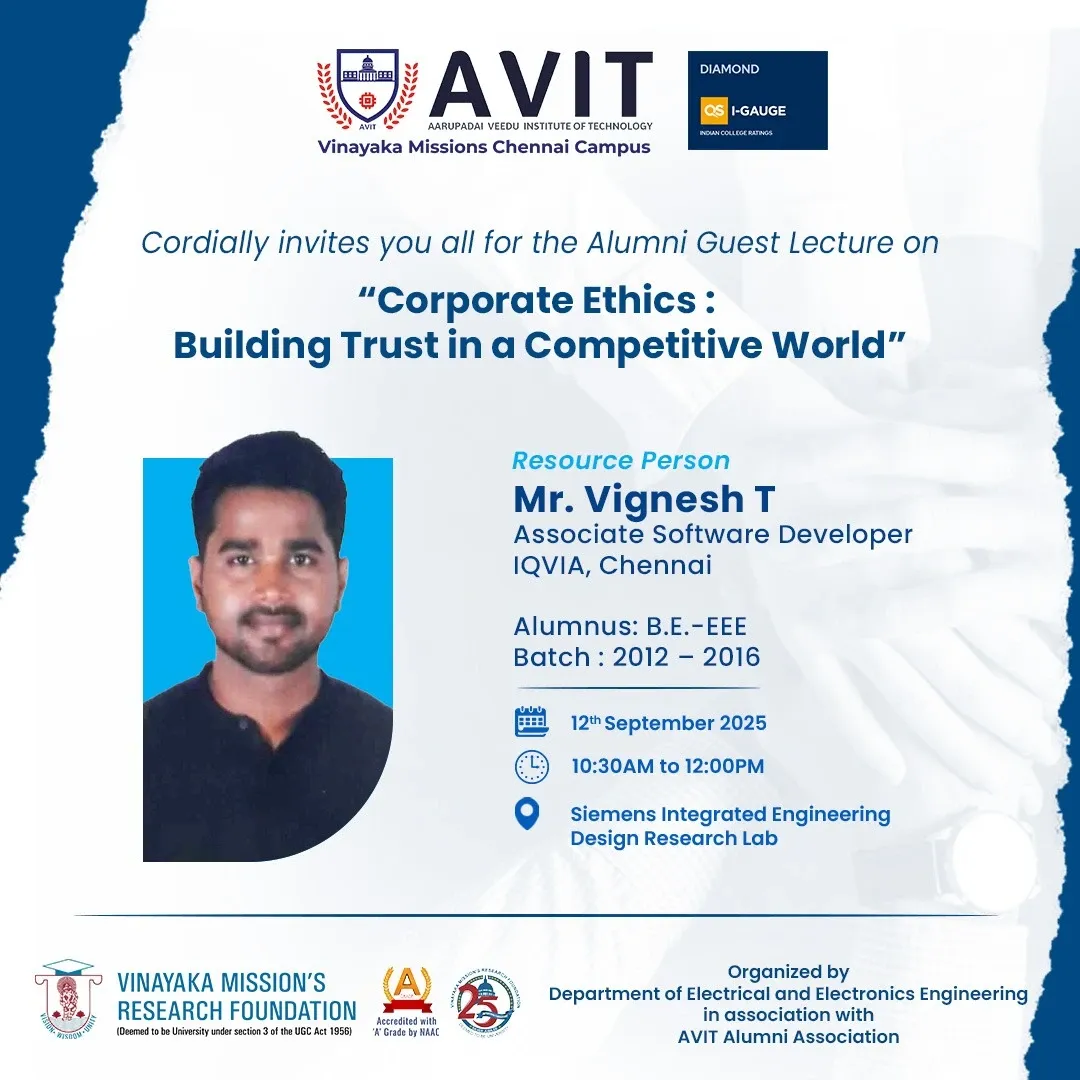
The Alumni Guest Lecture on "Corporate Ethics: Building Trust in a Competitive World"
12th September 2025
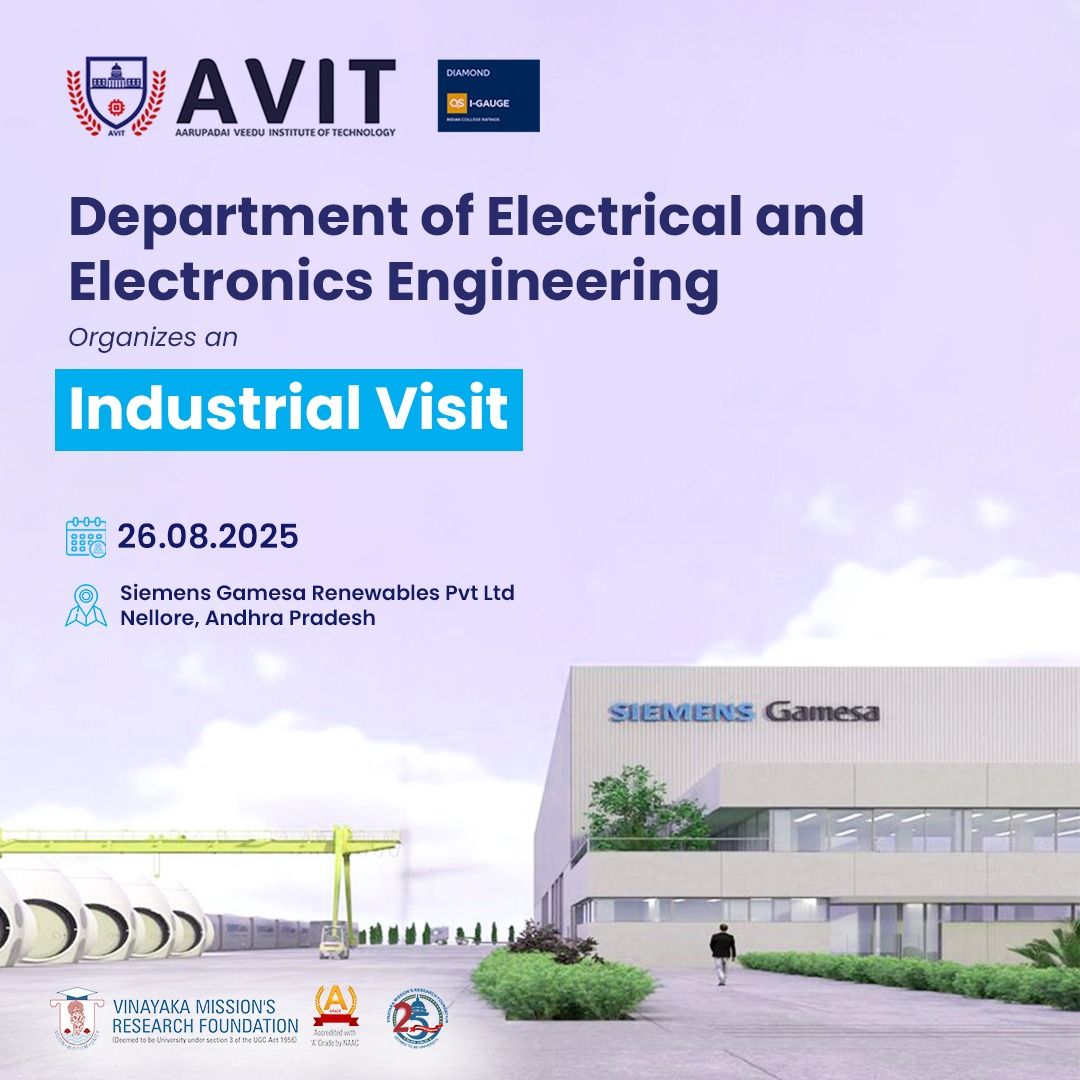
Industrial Visit - Siemens Gamesa Renewables Pvt Ltd, Nellore
26th August 2025
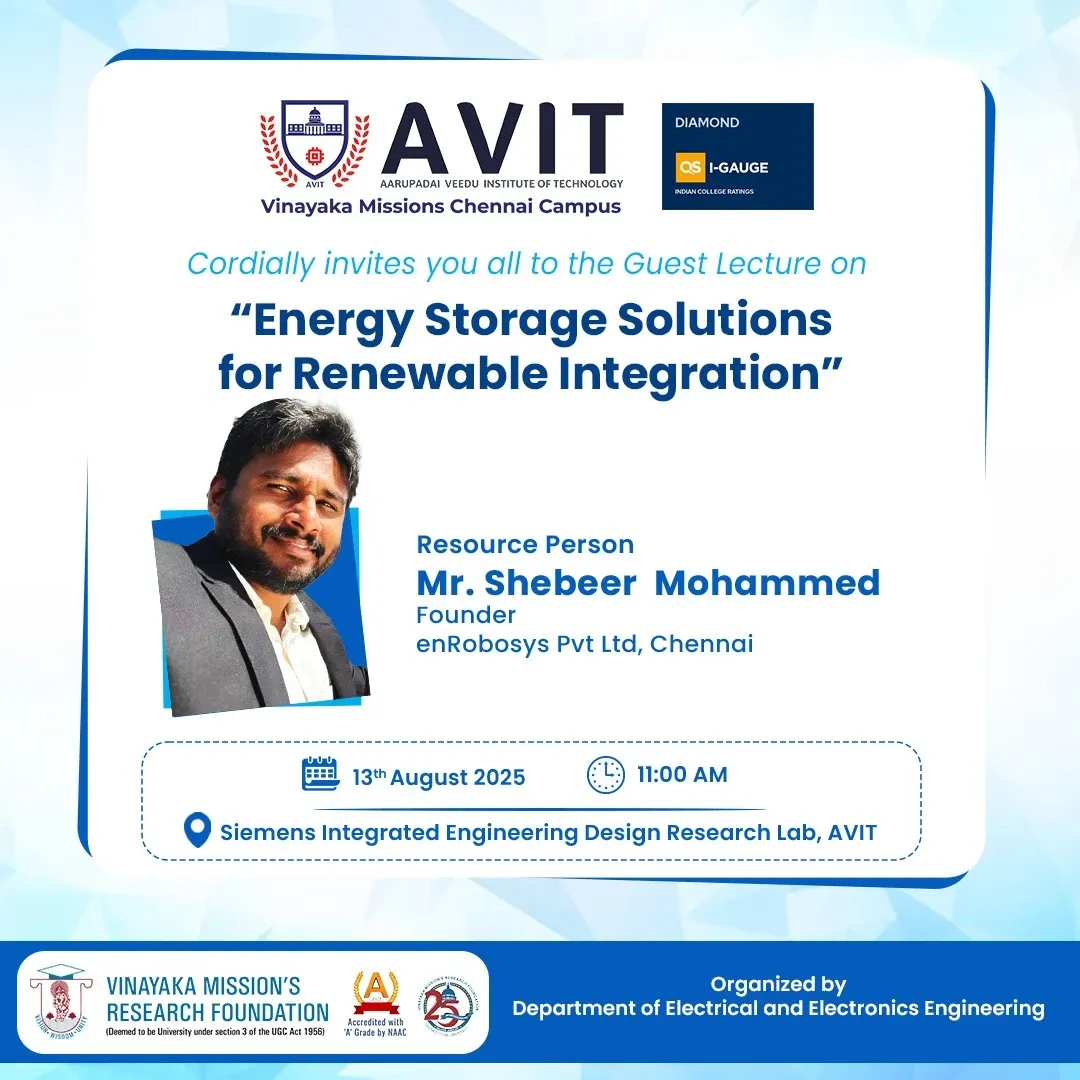
The Guest Lecture on "Energy Storage Solutions for Renewable Integration"
13th August 2025
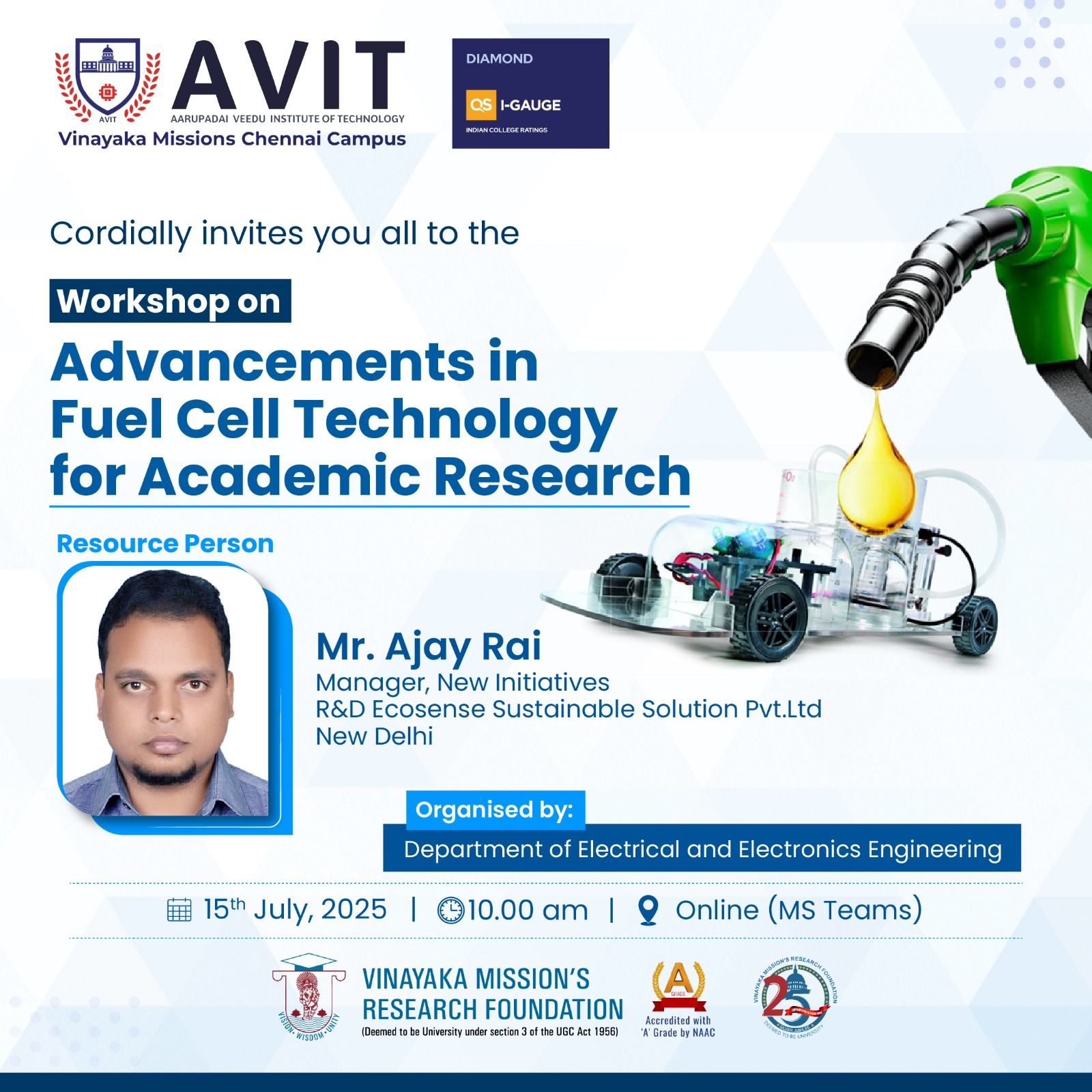
The Workshop on Advancements in Fuel Cell Technology for Academic Research
15th July 2025
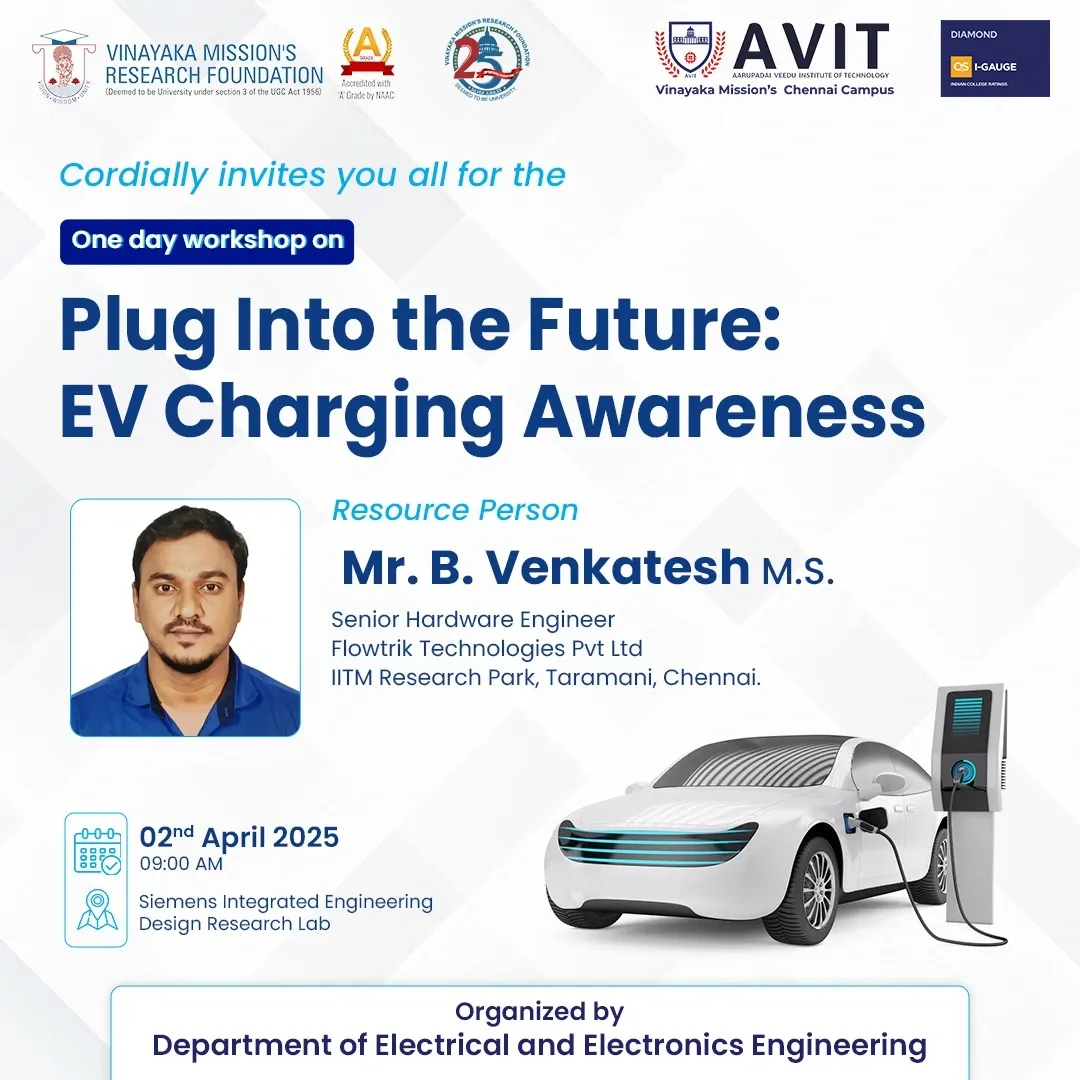
The One day workshop on Plug into the Future: EV Charging Awareness
2nd April 2025
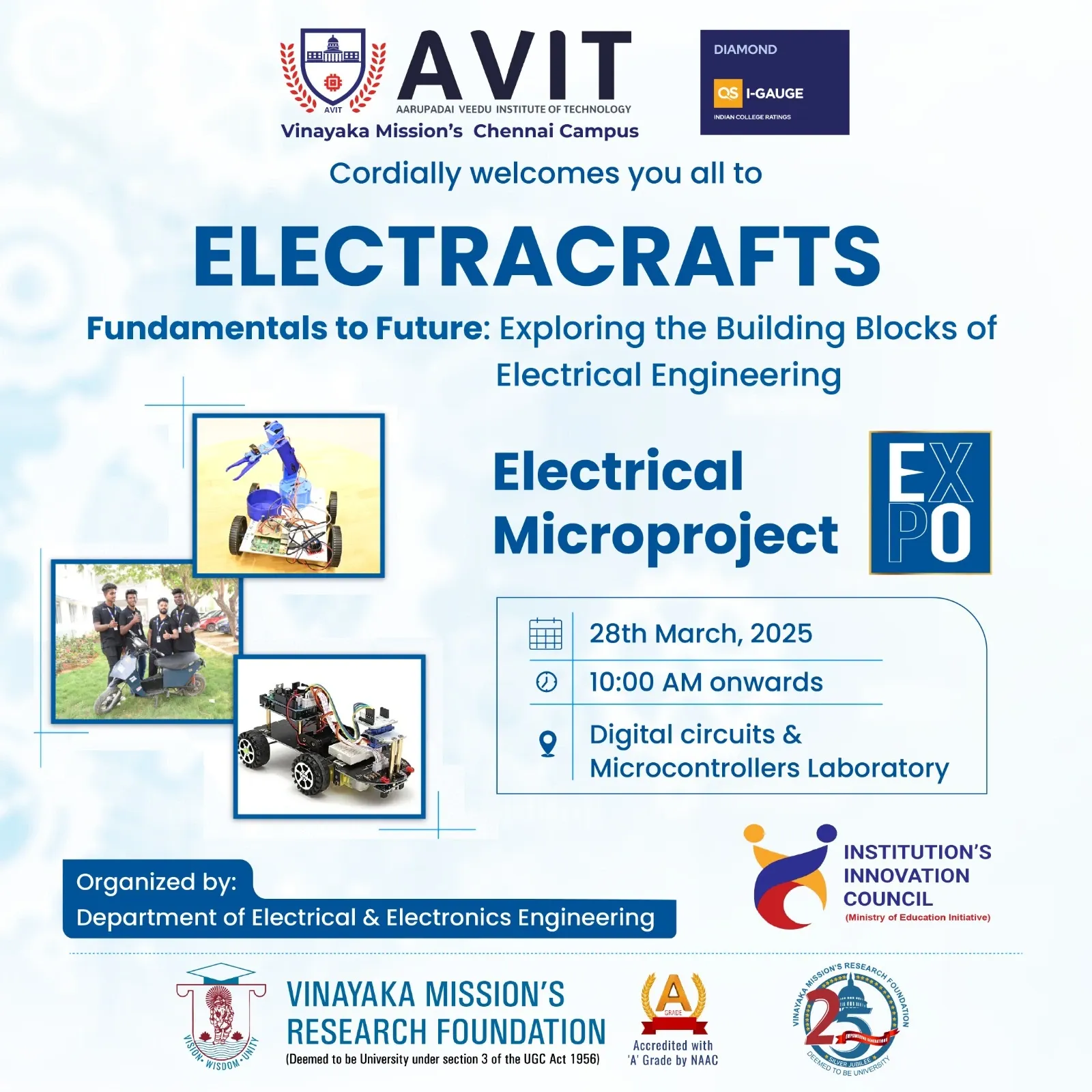
Electracrafts Fundamentals to Future: Exploring the Building Blocks of Electrical Engineering
28th March 2025
Dec
18
Report on National Energy Conservation Day - 18th December 2025
 Siemens Integrated Engineering Design Research Lab
Dec
18
National Energy Conservation Day Celebrations - 18th December 2025
Vinayaka Nagar, Rajiv Gandhi Salai
Sep
12
A Report on Alumni Guest Lecture on "Corporate Ethics: Building Trust in a Competitive World" - 12th September 2025
Vinayaka Nagar, Rajiv Gandhi Salai
Aug
26
Report on Industrial Visit to Siemens Gamesa Renewable Energy - 26th August 2025
Vinayaka Nagar, Rajiv Gandhi Salai
Aug
13
A Report on Guest Lecture “Energy Storage Solutions for Renewable Integration” - 13th August 2025
Vinayaka Nagar, Rajiv Gandhi Salai
Jul
27
A Report on Workshop “Efficient Battery Cell Packaging: Methods for Modern Energy Systems” - 27th July 2025
Vinayaka Nagar, Rajiv Gandhi Salai
Jul
15
A Report on Workshop on Advancements in Fuel Cell Technology for Academic Research - 15th July 2025
Vinayaka Nagar, Rajiv Gandhi Salai
Apr
07
A Report on The Value Added Course on Industry 4.0 Digital twin for process industry (VA225) - 3rd to 7th April 2025
Vinayaka Nagar, Rajiv Gandhi Salai
FREQUENTLY ASKED QUESTIONS
Have Questions? We Have Answers.
AVIT EEE combines industry-aligned curriculum, future-focused specializations in renewable energy and power electronics, advanced laboratories including the Centre of Excellence for Solar Energy, internships, certifications, research opportunities, and strong placement support to prepare students for successful engineering careers.
Students can pursue focus areas in Power Systems, Power Electronics, Renewable Energy, Automation & Control, Embedded Systems, Electric Vehicles, and Smart Grid, aligned with emerging industry demands.
Students benefit from collaborations and research grants from MNRE, DST, MHRD, and IIT Hyderabad, along with industry partnerships, certifications, internships, industry projects, expert talks, and hands-on learning experiences.
Graduates can pursue careers as Power Systems Engineers, Electrical Design Engineers, Power Electronics Engineers, Renewable Energy Engineers, Automation & Control Engineers, Embedded Systems Engineers, Electric Vehicle Engineers, Electrical Maintenance Engineers, Researchers, and Entrepreneurs.
Yes. Students actively participate in internships, national and international hackathons, technical competitions, research projects, patent development, innovation challenges, and startup incubation programs.
The department provides access to the Centre of Excellence for Solar Energy, Power Electronics Lab, Electrical Machines Lab, Power Systems Simulation Lab, Control & Instrumentation Lab, Renewable Energy Lab, Embedded Systems Lab, and High Voltage Lab.
The Centre of Excellence for Solar Energy at AVIT features a 126 kWp solar plant generating around 600 units of electricity per day, providing students hands-on exposure to real-world renewable energy generation, research, and innovation.
AVIT offers placement training, aptitude preparation, technical practice, mock interviews, industry mentoring, internships, and recruitment opportunities with leading core, product, and service-based companies.
Absolutely. The programme prepares students for higher education, research careers, postgraduate studies such as M.E. Power Systems Engineering, and doctoral programmes in India and abroad.
Students can apply through the AVIT admissions portal or contact the admissions office for guidance on eligibility, application procedures, scholarships, and programme selection.
ADMISSIONS OPEN
Your Future Begins at AVIT College
Innovative programs, expert faculty, and industry connections to guide your success.