




B.E. Biomedical Engineering
Build the skills to design, develop, and manage the technologies that power modern healthcare- from biomedical instrumentation and medical imaging to biosignal processing, medical robotics, rehabilitation engineering, and healthcare IoT. The B.E. Biomedical Engineering programme at AVIT combines strong engineering fundamentals with hands-on expertise in medical devices, diagnostics, instrumentation, and clinical technology.
PROGRAMME OVERVIEW
Engineering Better Healthcare for a Healthier Future
Biomedical Engineering at AVIT empowers students to become innovators and problem-solvers at the intersection of engineering, medicine, and technology. Established in 2008, the department blends strong foundations in human anatomy and physiology, electronics, biomedical instrumentation, and signal processing with specialized pathways in Medical Imaging, Medical Robotics, Bio-MEMS, Rehabilitation Engineering, Healthcare IoT, and Diagnostic & Therapeutic Equipment.
Through sensor-based diagnostics, medical robotics, and Bio-MEMS research, the department drives innovation that directly improves patient care. With industry-grade laboratories, certifications, hospital and clinical training, internships, and collaborations with leading medical device and healthcare technology partners, students gain real-world experience and future-ready skills. Supported by expert faculty and modern infrastructure, AVIT Biomedical Engineering prepares graduates for successful careers in medical device design, clinical engineering, healthcare technology management, instrumentation, research, and entrepreneurship.


WHY CHOOSE B.E. BIOMEDICAL?
Why Choose B.E. Biomedical Engineering at AVIT?
Build future-ready skills through industry-integrated learning, medical device and healthcare technology specializations, advanced research opportunities, and career-focused education designed for the age of digital and connected healthcare.
Future-Ready Curriculum
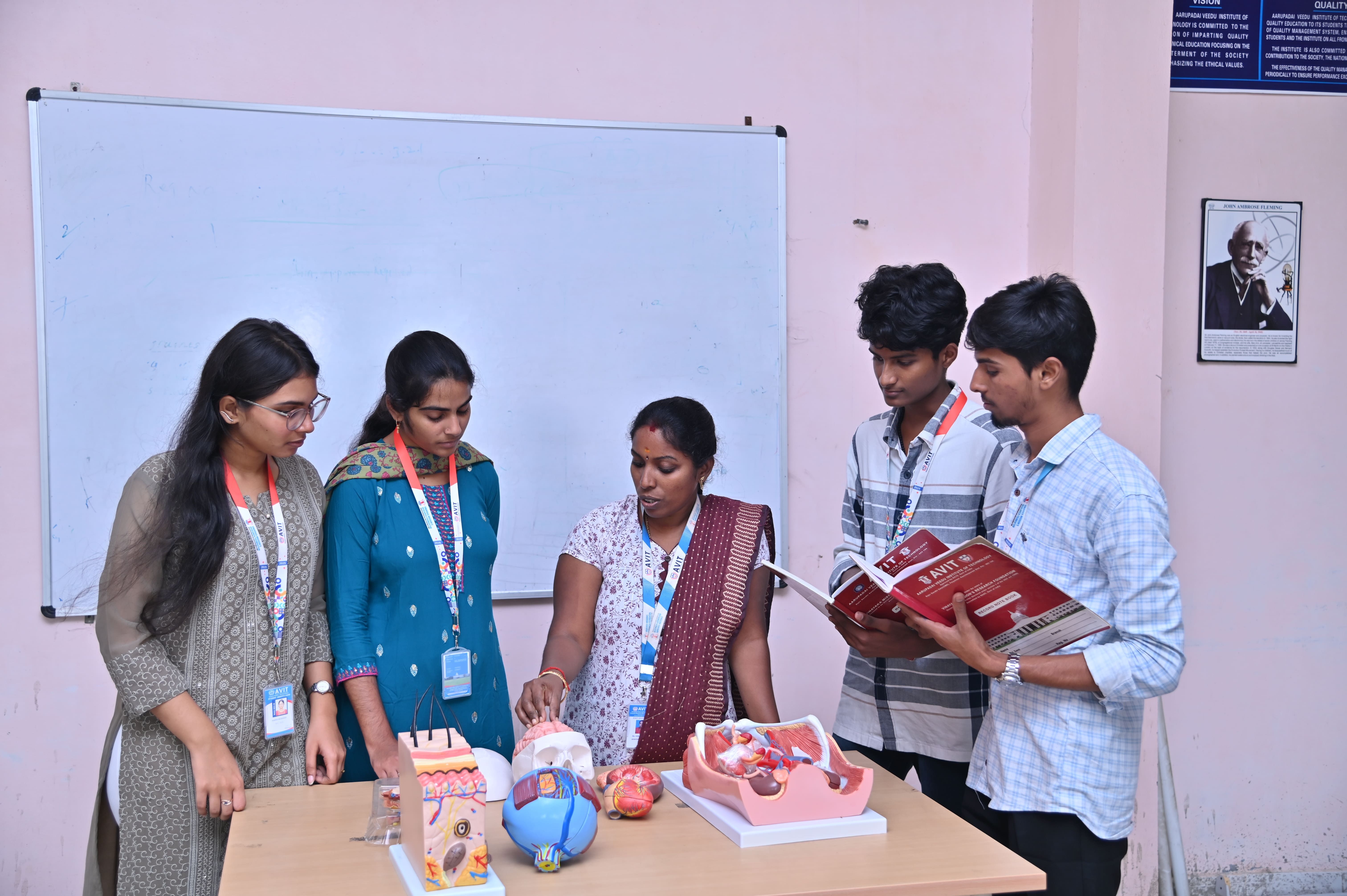
Learn human anatomy and physiology, biomedical instrumentation, biosignal processing, medical imaging, medical robotics, and healthcare IoT through an industry-aligned curriculum designed for the modern healthcare economy.

Industry Partnerships & Certifications
Gain hands-on experience through collaborations with leading medical device, healthcare technology, and clinical engineering companies, certification programs, internships, expert mentoring, and real-world project-based learning opportunities.

Hospital & Clinical Training
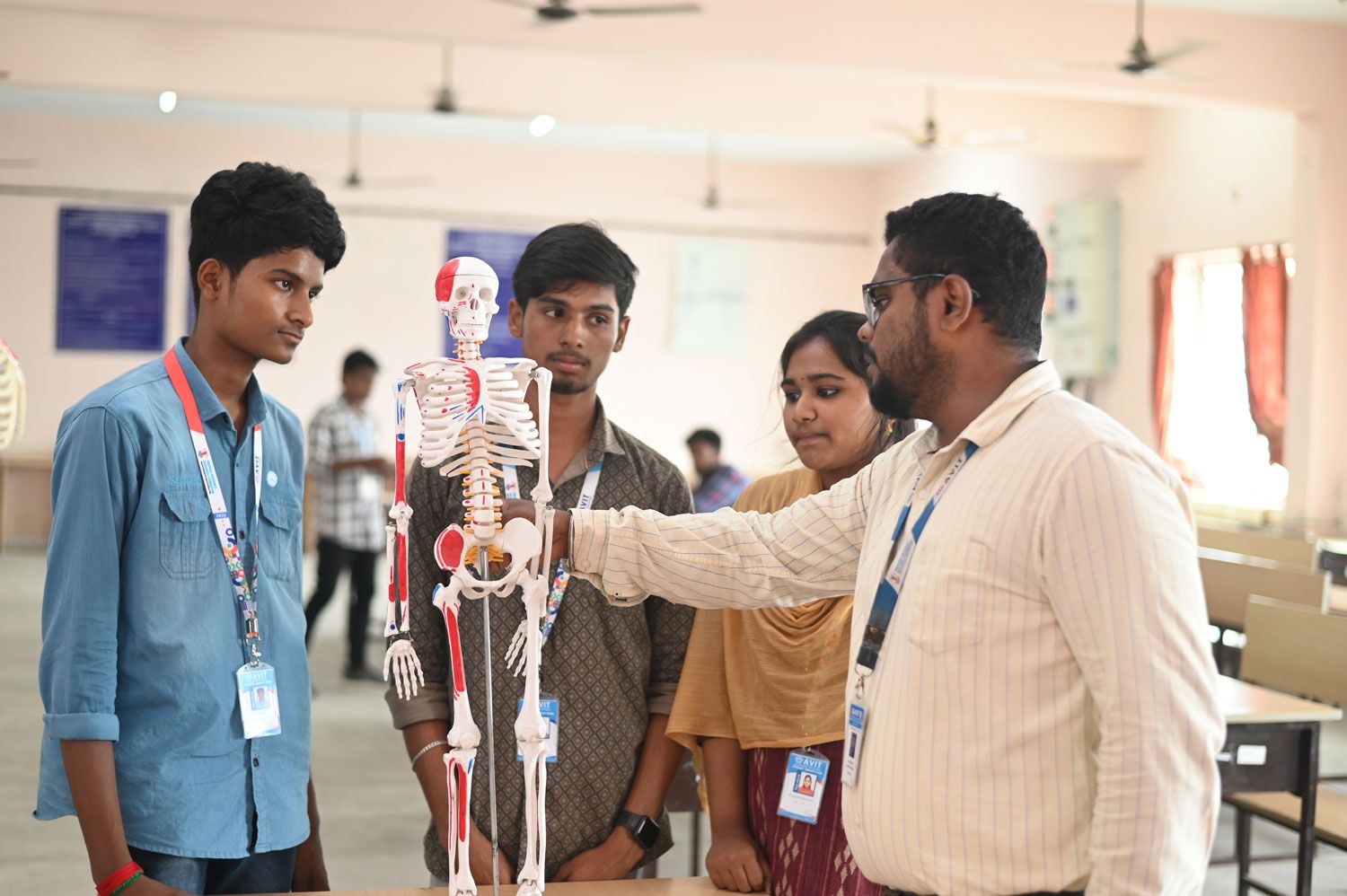
Work directly with diagnostic and therapeutic equipment through hospital training and clinical exposure, applying engineering skills in real healthcare environments.

Emerging Technology Specializations
Choose specialized pathways in Medical Imaging, Medical Robotics, Bio-MEMS, Rehabilitation Engineering, and Healthcare IoT to align with your career aspirations.

Research, Innovation & Entrepreneurship
Participate in research projects, patents, hackathons, innovation challenges, startup incubation initiatives, and multidisciplinary medical device and healthcare technology development programs.

Career-Focused Learning
Prepare for high-demand careers as Biomedical Engineers, Clinical Engineers, Medical Device Design Engineers, Healthcare Technology Managers, R&D Engineers, Quality/Regulatory Affairs Engineers, Researchers, and Entrepreneurs.
WHAT YOU'LL STUDY
Your Four-Year Learning Journey
The programme is structured as a progressive learning experience- from engineering and life-science fundamentals to advanced biomedical instrumentation, medical imaging, and healthcare technology and real-world applications.

YEAR 1
Engineering Foundations & Scientific Thinking
Focus Areas
- Basic Electrical & Electronics Engineering
- Problem Solving using C
- Engineering Mathematics
- Physical Sciences
- Human Anatomy & Physiology
- Communication & Professional Skills
- Design Thinking Foundations
- Engineering Graphics
- Idea Lab
Outcome: Develop strong analytical reasoning, electronics fundamentals, life-science basics, and communication skills required for advanced biomedical engineering studies.
YEAR 2
Core Biomedical & Electronics Systems
Focus Areas
- Electronic Devices & Circuits
- Sensors & Measurements
- Biomedical Instrumentation
- Analog & Digital Electronics
- Biomechanics
- Microcontrollers & Embedded Systems
- Medical Physics
Outcome: Build a strong foundation in biomedical instrumentation, electronics, sensors, and the measurement of physiological signals.

YEAR 3
Diagnostics, Imaging & Healthcare Technology
Focus Areas
- Biosignal Processing
- Medical Imaging
- Diagnostic & Therapeutic Equipment
- Biomaterials
- Medical Robotics
- Healthcare IoT
- Professional Electives
Outcome: Design, analyze, and develop diagnostic, imaging, and therapeutic systems using modern biomedical engineering technologies.
YEAR 4
Industry Integration & Innovation
Focus Areas
- Advanced Electives
- Hospital Management & Safety
- Internship
- Mini Project
- Capstone Project
- Research Methodology
- Innovation & Entrepreneurship
Outcome: Graduate with hospital and industry experience, research exposure, problem-solving skills, and professional readiness.
PATHWAY OPTIONS
Honors, Minors & Specializations
HONORS DEGREE
- Medical Imaging Technologies
- Medical Robotics & Automation
SPECIALIZATIONS
- Hospital Management
- Implants & Rehabilitation Engineering
- Clinical Engineering
- AI Techniques for Medical Imaging
MINOR DEGREE OPTIONS
- Embedded Systems and IoT
CAREER OUTCOMES: Biomedical Engineer | Clinical Engineer | Medical Device Design Engineer | Healthcare Technology Manager | R&D Engineer (Medical Devices) | Rehabilitation Engineer | Service Engineer

PROGRAMME HIGHLIGHTS
What You'll Achieve with Us
Engineering Graduates will be able to:
Apply knowledge of mathematics, natural science, computing, engineering fundamentals and an engineering specialization as specified in WK1 to WK4 respectively to develop to the solution of complex engineering problems.
Identify, formulate, review research literature and analyze complex engineering problems reaching substantiated conclusions with consideration for sustainable development. (WK1 to WK4)
Design creative solutions for complex engineering problems and design/develop systems/components/processes to meet identified needs with consideration for the public health and safety, whole-life cost, net zero carbon, culture, society and environment as required. (WK5)
Conduct investigations of complex engineering problems using research-based knowledge including design of experiments, modelling, analysis & interpretation of data to provide valid conclusions. (WK8)
Create, select and apply appropriate techniques, resources and modern engineering & IT tools, including prediction and modelling recognizing their limitations to solve complex engineering problems. (WK2 and WK6)
Analyze and evaluate societal and environmental aspects while solving complex engineering problems for its impact on sustainability with reference to economy, health, safety, legal framework, culture and environment. (WK1, WK5, and WK7)
Apply ethical principles and commit to professional ethics, human values, diversity and inclusion; adhere to national & international laws. (WK9)
Function effectively as an individual, and as a member or leader in diverse/multi-disciplinary teams.
Communicate effectively and inclusively within the engineering community and society at large, such as being able to comprehend and write effective reports and design documentation, make effective presentations considering cultural, language, and learning differences.
Apply knowledge and understanding of engineering management principles and economic decision-making and apply these to one's own work, as a member and leader in a team, and to manage projects and in multidisciplinary environments.
Recognize the need for, and have the preparation and ability for i) independent and life-long learning ii) adaptability to new and emerging technologies and iii) critical thinking in the broadest context of technological change. (WK8)
A graduate of the Bio Medical Engineering Programme will demonstrate:
-
PSO 1
Analyze, Plan and Design the equipment in multidomains of biomedical engineering.
-
PSO 2
Hone their professional's expertise in quest for improved career opportunities through sustained learning.
-
PSO 3
Work with ethical principles and sound managerial skills in the promotion of biomedical engineering infrastructure keeping in mind, patient health, instrument safety and sustainability of the society.
The graduates will:
-
PEO 1
Graduates will demonstrate their skills in solving challenges ranging from design, development, problem solving to production support in health care sectors.
-
PEO 2
Graduates will exhibit leadership, make decisions with social and ethical responsibilities, communicate effectively in multidisciplinary engineering environment.
-
PEO 3
Graduates will recognize the need for sustaining and expanding their technical competence and engage in learning opportunities throughout the careers.
Dr. D. Vinod kumar Professor & Head, BME, VMKVEC
Dr. N. Babu Professor, BME, VMKVEC
Mr. Mathankumar Associate Professor, BME, VMKVEC
Mrs. S. Vaishnodevi Assistant Professor, BME, VMKVEC
Ms. LakshmiShree Assistant Professor, BME, AVIT
Mr. V. Prabhakaran Assistant Professor, BME, AVIT
Dr. N. Ruban Associate Professor & Head of the Department, Department of Control & Automation (Biomedical), School of Electrical Engineering, Vellore Institute of Technology, Vellore.
Dr. V. Sapthgirivasan Manager, R&D (Medical Devices) Capgemini

 CAREER OPPORTUNITIES
Where Will Your Degree Take You?
From Medical Device Design and Clinical Engineering to Medical Imaging, Healthcare Technology Management, Rehabilitation Engineering, Research, and Entrepreneurship, an AVIT Biomedical Engineering degree opens pathways to some of the world's most essential and fastest-growing healthcare technology careers.
Biomedical Engineer
Design, develop, and maintain biomedical instruments and medical devices that improve diagnosis, treatment, and patient care across hospitals and industry.

Medical Device Design Engineer
Design and prototype diagnostic and therapeutic equipment, sensors, and Bio-MEMS for next-generation healthcare applications.
Clinical Engineer
Manage, calibrate, and maintain medical equipment in hospitals, ensuring safety, compliance, and reliable performance of clinical technology.

Healthcare Technology Manager
Plan and oversee healthcare technology deployment, lifecycle management, and integration of medical systems across healthcare facilities.

R&D Engineer (Medical Devices)
Drive research and development of medical imaging systems, biosignal processing, and medical robotics for advanced healthcare solutions.
Quality & Regulatory Affairs Engineer
Ensure medical devices meet quality standards and regulatory requirements, working across rehabilitation engineering, application support, and service roles.
LABORATORIES & FACILITIES
Learn in Industry-Grade Labs
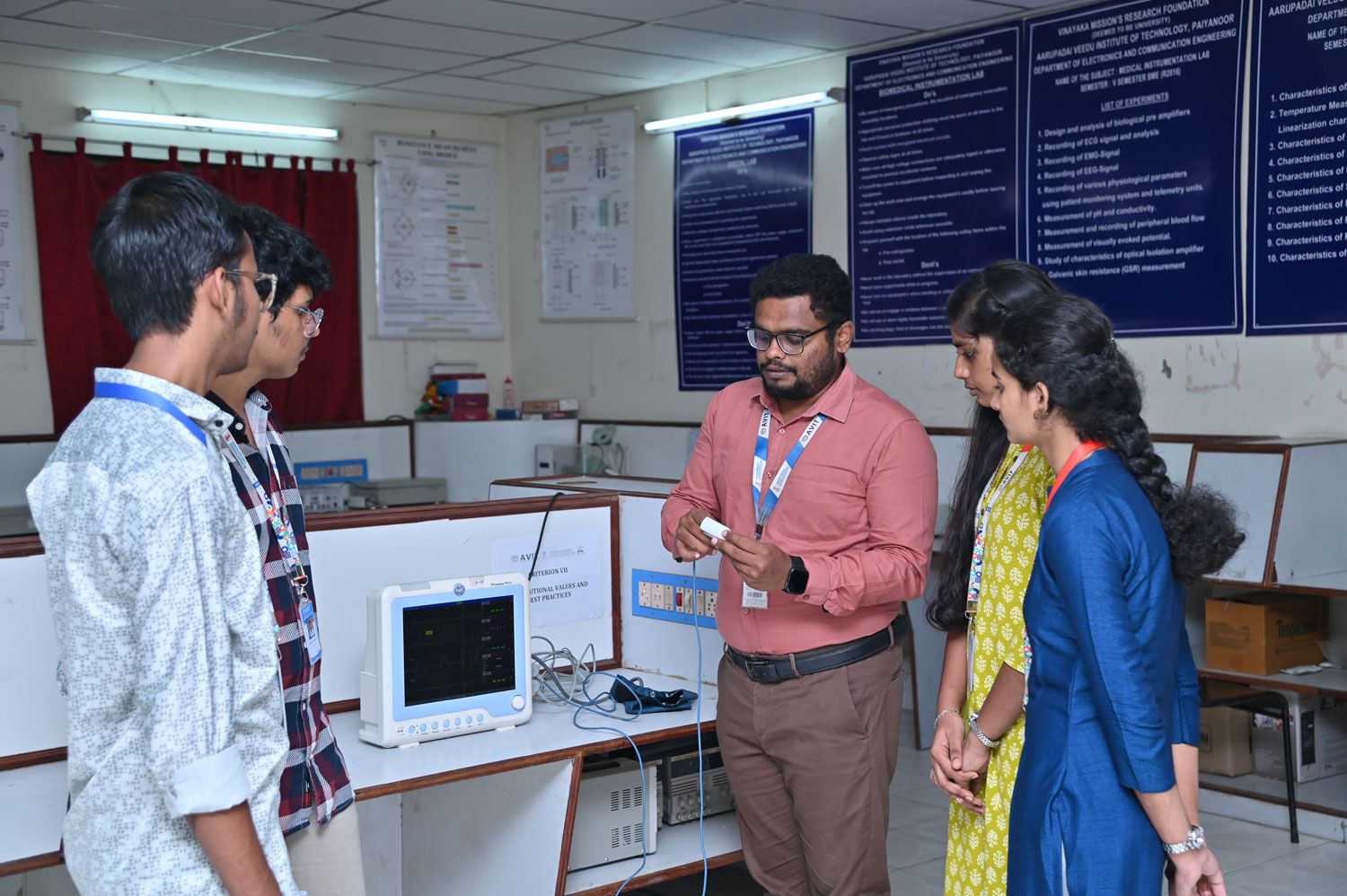
Medical Instrumentation Lab
Patient monitoring & diagnostic equipment
Biomedical Signal Processing Lab
ECG, EEG, EMG & biosignal workstations
Medical Imaging Lab
Imaging systems & image processing tools
Rehabilitation Engineering Lab
Assistive devices & biomechanics setups
INTERNSHIPS
Build Your Future with Industry-Integrated Internship Programs
At AVIT, internships connect classroom learning with real-world exposure across hospitals, medical device industry, and healthcare technology sectors.
AMTZ (Andhra Pradesh MedTech Zone)
MedTech Internship via VEmerge+
Assured Internship, Medical Device Certifications, Capstone Project
Medical Robotics Research Internship
Research project, robotics certificate, Capstone Project
Hospital & Clinical Training
Clinical Engineering Internship
Hands-on diagnostic & therapeutic equipment, safety training, clinical exposure
Medical Device Industry Partners
Healthcare Technology Internship Programme
Real-world healthcare problems, group projects, enhanced technical skills
RELATED PROGRAMMES
Explore Other Academic Opportunities
Beyond the core B.E. Biomedical Engineering programme, AVIT offers specialised engineering pathways across biomedical, electronics, and computing disciplines- each designed for high-demand technology and core engineering careers.


FREQUENTLY ASKED QUESTIONS
Common Questions About B.E. Biomedical Engineering
AVIT Biomedical Engineering combines an industry-aligned curriculum, future-focused specializations in medical imaging, medical robotics, and healthcare IoT, hospital and clinical training, advanced laboratories, internships, certifications, research opportunities, and strong placement support to prepare students for successful healthcare technology careers.
Students can pursue specialized pathways in Biomedical Instrumentation, Medical Imaging, Medical Robotics, Bio-MEMS, Rehabilitation Engineering, and Healthcare IoT, aligned with emerging industry demands.
Established in 2008, the department drives research in medical robotics, Bio-MEMS, and sensor-based diagnostics, supported by industry-grade laboratories, hospital training, and industry exposure.
Graduates can pursue careers as Biomedical Engineers, Clinical Engineers, Medical Device Design Engineers, Biomedical Equipment Technologists, Healthcare Technology Managers, R&D Engineers (Medical Devices), Quality/Regulatory Affairs Engineers, Rehabilitation Engineers, Application Specialists, Service Engineers, Researchers, and Entrepreneurs.
Yes. Students actively participate in hospital and industry internships, national and international hackathons, technical competitions, research projects, patent development, innovation challenges, and startup incubation programs.
The department provides access to the Medical Instrumentation Lab, Biomedical Signal Processing Lab, Medical Imaging Lab, Biomaterials Lab, Rehabilitation Engineering Lab, Biosensors Lab, and Bio-MEMS Lab, along with hospital and clinical training.
Yes. Students can enhance their academic profile through Honors Degrees, Minor Degrees, and specialized pathways in emerging technologies such as medical robotics and healthcare IoT based on curriculum regulations.
AVIT offers placement training, aptitude preparation, technical skill development, mock interviews, industry mentoring, internships, and recruitment opportunities with leading medical device, healthcare technology, and core engineering companies.
Absolutely. The programme prepares students for higher education, research careers, postgraduate studies, and doctoral programmes in India and abroad.
Students can apply through the AVIT admissions portal or contact the admissions office for guidance on eligibility, application procedures, scholarships, and programme selection.
ADMISSIONS OPEN
Ready to Engineer the Future of Healthcare?
Healthcare runs on technology- and the demand for skilled biomedical engineers designing the medical devices, diagnostics, and healthcare systems of tomorrow has never been greater. The B.E. Biomedical Engineering programme at AVIT provides the foundation, hospital and industry exposure, and technical depth you need to build a lasting career in medical devices, clinical engineering, and healthcare technology.