




B.E. Electronics and Communication Engineering (Lateral Entry)
A focused 3-year lateral-entry pathway for diploma holders who join directly in the second year. Build on your diploma foundation to design, build, and connect the systems that drive the modern world- from electronic devices and communication networks to VLSI chips, embedded systems, IoT, and wireless technologies. The B.E. ECE (Lateral Entry) programme at AVIT combines strong engineering fundamentals with hands-on expertise in electronics, communication, signal processing, and embedded technologies.
PROGRAMME OVERVIEW
Powering a Connected and Intelligent Future
The B.E. Electronics and Communication Engineering (Lateral Entry) programme at AVIT is a 3-year pathway designed exclusively for diploma holders who enter the degree directly in the second year. Building on the practical foundation gained during diploma studies, students advance straight into the core of Electronics and Communication Engineering- digital electronics, signals and systems, communication engineering, and electronic circuits- with specialized pathways in VLSI Design, Embedded Systems, IoT, Wireless Communication, Digital Signal Processing, and Microwave Engineering.
Home to advanced research facilities- including a DRDO-funded Lab and an e-Yantra (IIT Bombay) Lab- the department drives innovation in electronics, communication, and embedded systems. Through industry-grade laboratories, certifications, internships, funded research projects, and collaborations with leading electronics and semiconductor partners, lateral-entry students gain real-world experience and future-ready skills. Supported by expert faculty and modern infrastructure, AVIT ECE prepares graduates for successful careers in VLSI design, embedded systems, communication, IoT, signal processing, semiconductor engineering, research, and entrepreneurship.


WHY CHOOSE B.E. ECE (LATERAL ENTRY)?
Why Choose B.E. Electronics & Communication Engineering (Lateral Entry) at AVIT?
Build future-ready skills through industry-integrated learning, VLSI and embedded systems specializations, advanced research opportunities, and career-focused education designed for the age of connected electronics and intelligent systems.
Future-Ready Curriculum
Learn electronic devices, digital electronics, communication systems, VLSI design, embedded systems, signal processing, and IoT through an industry-aligned curriculum designed for the modern electronics economy.

Industry Partnerships & Certifications
Gain hands-on experience through collaborations with leading electronics, semiconductor, and communication companies, certification programs, internships, expert mentoring, and real-world project-based learning opportunities.

DRDO-Funded & e-Yantra Labs
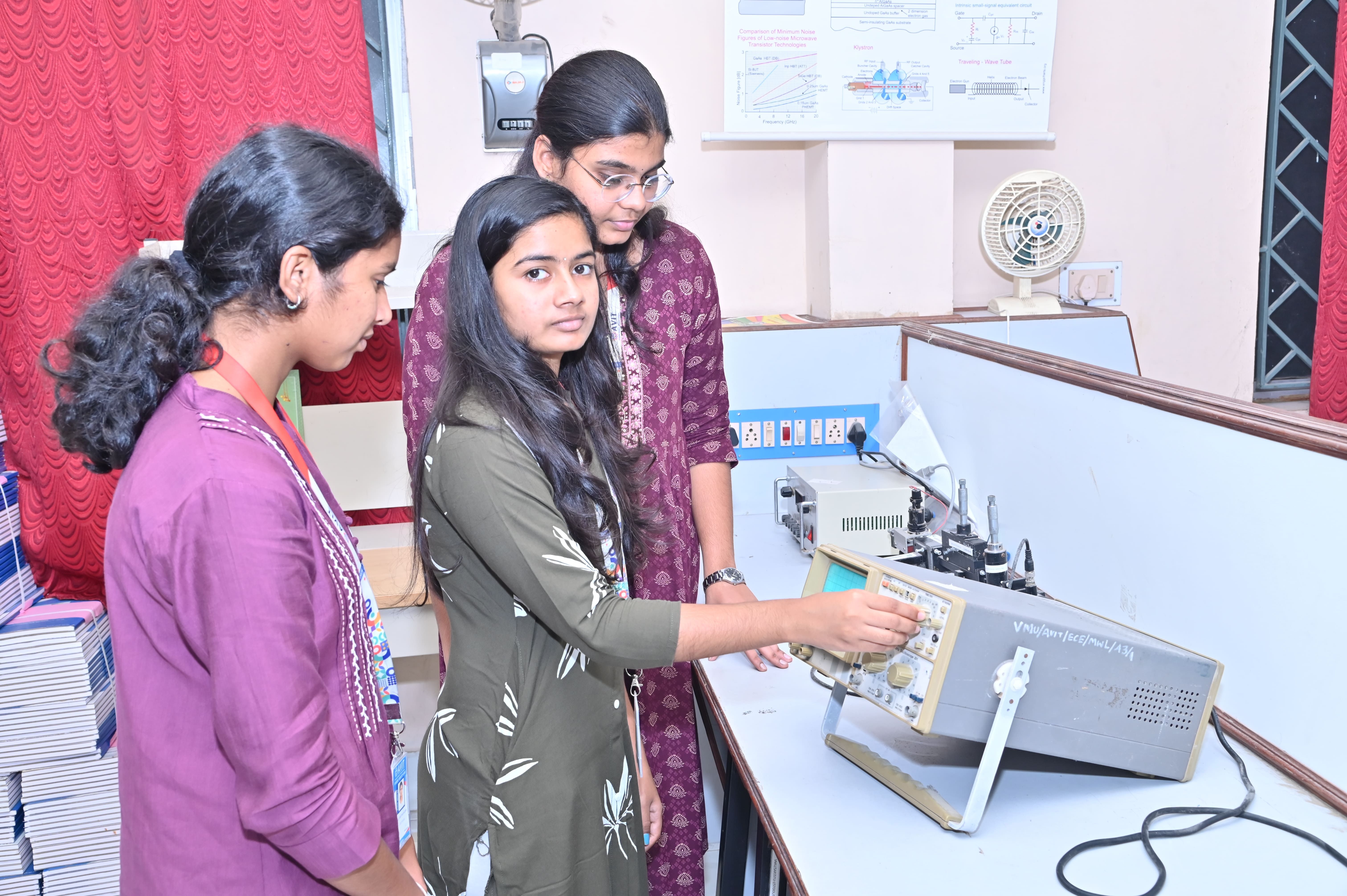
Work in advanced research facilities including a DRDO-funded Lab and an e-Yantra (IIT Bombay) Lab, with hands-on exposure to VLSI, embedded systems, robotics, and communication research.

Emerging Technology Specializations
Choose specialized pathways in VLSI Design, Embedded Systems, IoT, Wireless Communication, and Digital Signal Processing to align with your career aspirations.

Research, Innovation & Entrepreneurship
Participate in funded research projects, patents, hackathons, innovation challenges, startup incubation initiatives, and multidisciplinary electronics and communication development programs.

Career-Focused Learning
Prepare for high-demand careers as VLSI Design Engineers, Embedded Systems Engineers, Communication Engineers, IoT Engineers, Network/RF Engineers, Signal Processing Engineers, Researchers, and Entrepreneurs.
WHAT YOU'LL STUDY
Your Three-Year Learning Journey
As a 3-year lateral-entry pathway, diploma holders join directly in the second academic year and progress through core electronics, communication, and embedded systems to advanced, real-world applications.
YEAR 1 (SECOND YEAR)
Core Electronics & Communication Systems
Focus Areas
- Digital Electronics
- Signals & Systems
- Analog & Digital Communication
- Electromagnetic Fields & Waves
- Electronic Circuits & Networks
- Microprocessors & Microcontrollers
- Control Systems
Outcome: Build a strong foundation in digital electronics, communication, and the analysis of signals and electronic systems, leveraging your diploma background.

YEAR 2 (THIRD YEAR)
VLSI, Communication & Embedded Systems
Focus Areas
- VLSI Design
- Digital Signal Processing
- Communication Networks
- Antennas & Wave Propagation
- Embedded Systems
- Microwave Engineering
- Professional Electives
Outcome: Design, analyze, and develop electronics, communication, and embedded systems using modern engineering technologies.
YEAR 3 (FINAL YEAR)
Industry Integration & Innovation
Focus Areas
- Advanced Electives
- Internship
- Mini Project
- Capstone Project
- Research Methodology
- Innovation & Entrepreneurship
Outcome: Graduate with industry experience, research exposure, problem-solving skills, and professional readiness.
PATHWAY OPTIONS
Honors, Minors & Specializations
HONORS DEGREE
- VLSI Design Technologies
- Wireless & 5G Communication
SPECIALIZATIONS
- VLSI Design
- Embedded Systems
- Communication Systems
MINOR DEGREE OPTIONS
- IoT and Embedded Systems
CAREER OUTCOMES: VLSI Design Engineer | Embedded Systems Engineer | Communication Engineer | IoT Engineer | Network/RF Engineer | Signal Processing Engineer | Semiconductor Engineer

PROGRAMME HIGHLIGHTS
What You'll Achieve with Us
Engineering Graduates will be able to:
Apply the knowledge of mathematics, science, engineering fundamentals, and an engineering specialisation to the solution of complex engineering problems.
Identify, formulate, review research literature, and analyse complex engineering problems reaching substantiated conclusions using first principles of mathematics, natural sciences, and engineering science.
Design solutions for complex engineering problems and design system components or processes that meet the specified needs with appropriate consideration for the public health and safety, and the cultural, societal, and environmental considerations.
Use research-based knowledge and research methods including design of experiments, analysis and interpretation of data, and synthesis of the information to provide valid conclusions.
Create, select, and apply appropriate techniques, resources, and modern engineering and IT tools including prediction and modeling to complex engineering activities with an understanding of the limitations.
Apply reasoning informed by the contextual knowledge to assess societal, health, safety, legal and cultural issues and the consequent responsibilities relevant to the professional engineering practice.
Understand the impact of the professional engineering solutions in societal and environmental contexts, and demonstrate the knowledge of, and need for sustainable development.
Apply ethical principles and commit to professional ethics and responsibilities and norms of the engineering practice.
Function effectively as an individual, and as a member or leader in diverse teams, and in multidisciplinary settings.
Communicate effectively on complex engineering activities with the engineering community and with society at large, such as, being able to comprehend and write effective reports and design documentation, make effective presentations, and give and receive clear instructions.
Demonstrate knowledge and understanding of the engineering and management principles and apply these to one’s own work, as a member and leader in a team, to manage projects and in multidisciplinary environments.
Recognise the need for, and have the preparation and ability to engage in independent and life-long learning in the broadest context of technological change.
Graduating Students of Electronics and Communication Engineering programme will be able to:
-
PSO 1
An ability to apply concepts in Electronics & Communication Engineering to design and implement complex systems in the areas related to Analog and Digital Electronics, Communication, Signal processing ,VLSI and Embedded systems.
-
PSO 2
An ability to make use of acquired technical knowledge for successful career and qualifying in competitive examinations at the National and Global levels.
Demonstrate technical competence in identifying, analysing and designing innovative, sustainable and cost effective solutions for complex problems.
Adapt to rapid changes in tools and technology with an understanding of societal and ecological issues relevant to professional engineering practice through life-long learning.
Work successfully in collaborative and multi-disciplinary environments upholding professional and ethical values or pursue higher studies or research.
DR. P. SELVAM PROFESSOR & HEAD, ECE, VMKVEC
DR. T. MUTHUMANICKAM PROFESSOR, ECE, VMKVEC
DR. L. K. HEMA PROFESSOR & HEAD, ECE, AVIT
DR. D. VIJENDRA BABU PROFESSOR, ECE, AVIT
MR. S. SELVARAJU ASSOCIATE PROFESSOR, ECE, VMKVEC
MR. KARTHIKEYAN ASSISTANT PROFESSOR, ECE, AVIT
MR. VIJAY. J ASSISTANT PROFESSOR, ECE, AVIT
MR. M. ARUNKUMAR ASSISTANT PROFESSOR, ECE, VMKVEC
MR. GANESH BALA DIRECTOR – ENGINEERING, ASIA, AMPHENOL ANTENNA SOLUTIONS, INDIA
DR. D. SRIRAM KUMAR PROFESSOR, ECE, NATIONAL INSTITUTE OF TECHNOLOGY, TRICHY
 OUR FLAGSHIP INITIATIVE
VEmerge+ Industry Integrated Programmes
Developed in Collaboration With Leading Industry Partners
CAREER OPPORTUNITIES
Where Will Your Degree Take You?
From VLSI and Embedded Systems to Communication, IoT, Signal Processing, Semiconductors, Research, and Entrepreneurship, an AVIT ECE degree opens pathways to some of the world's most essential and fastest-growing electronics and communication careers.
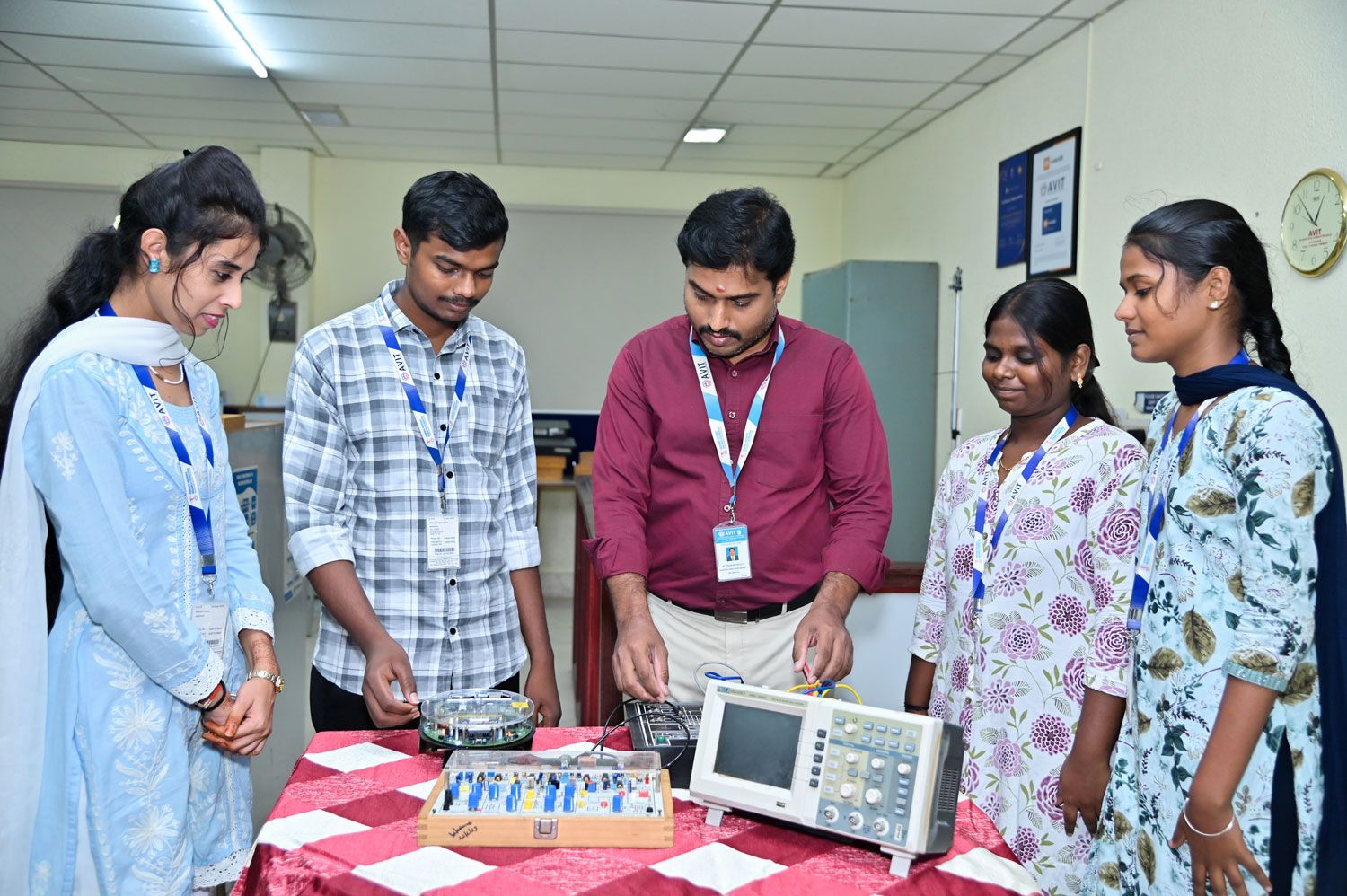
VLSI Design Engineer
Design and verify integrated circuits and chips that power computing, mobile, and consumer electronics across the semiconductor industry.
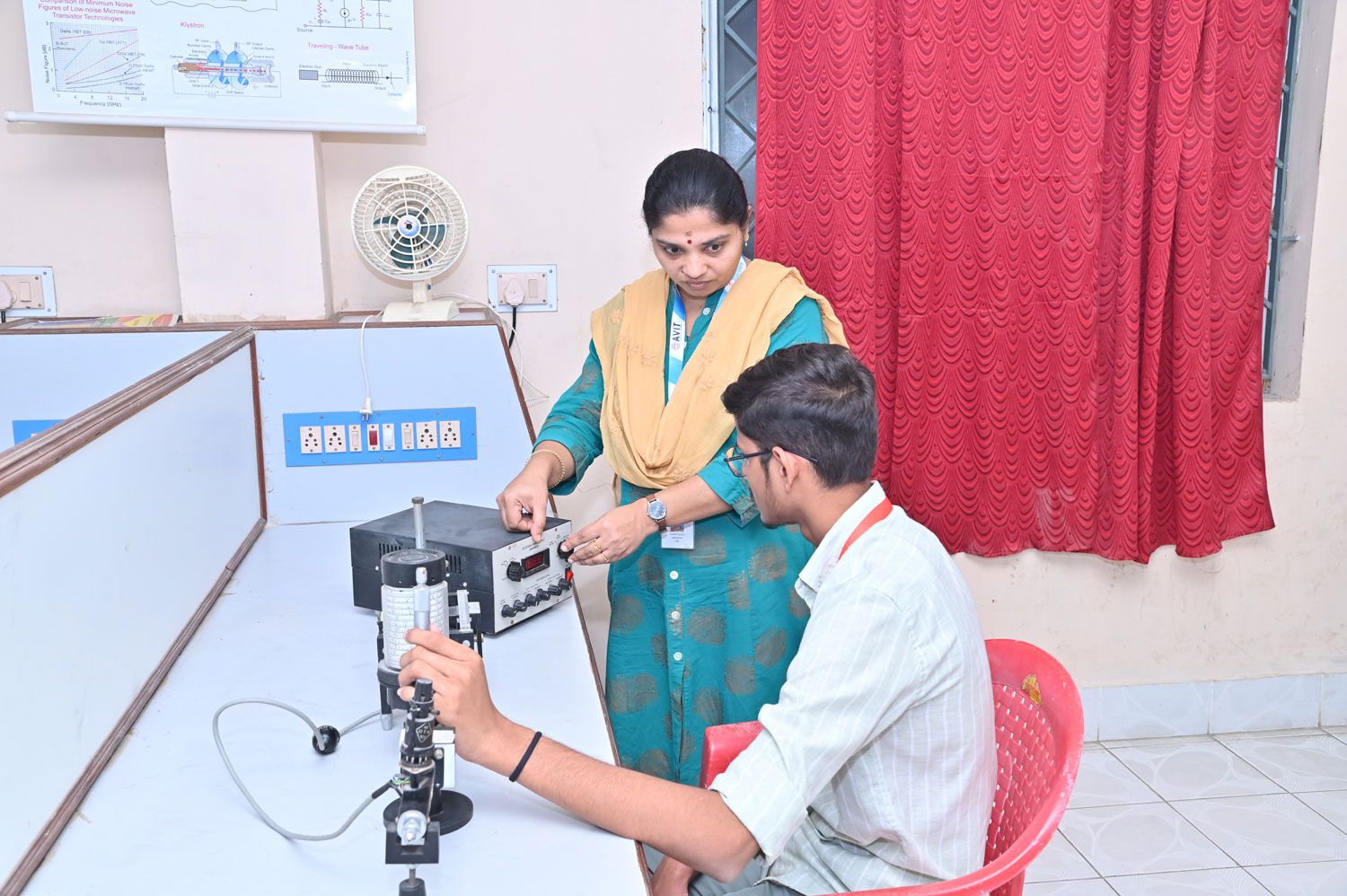
Embedded Systems Engineer
Develop firmware, microcontroller-based systems, and embedded software for IoT, automotive, and smart devices.
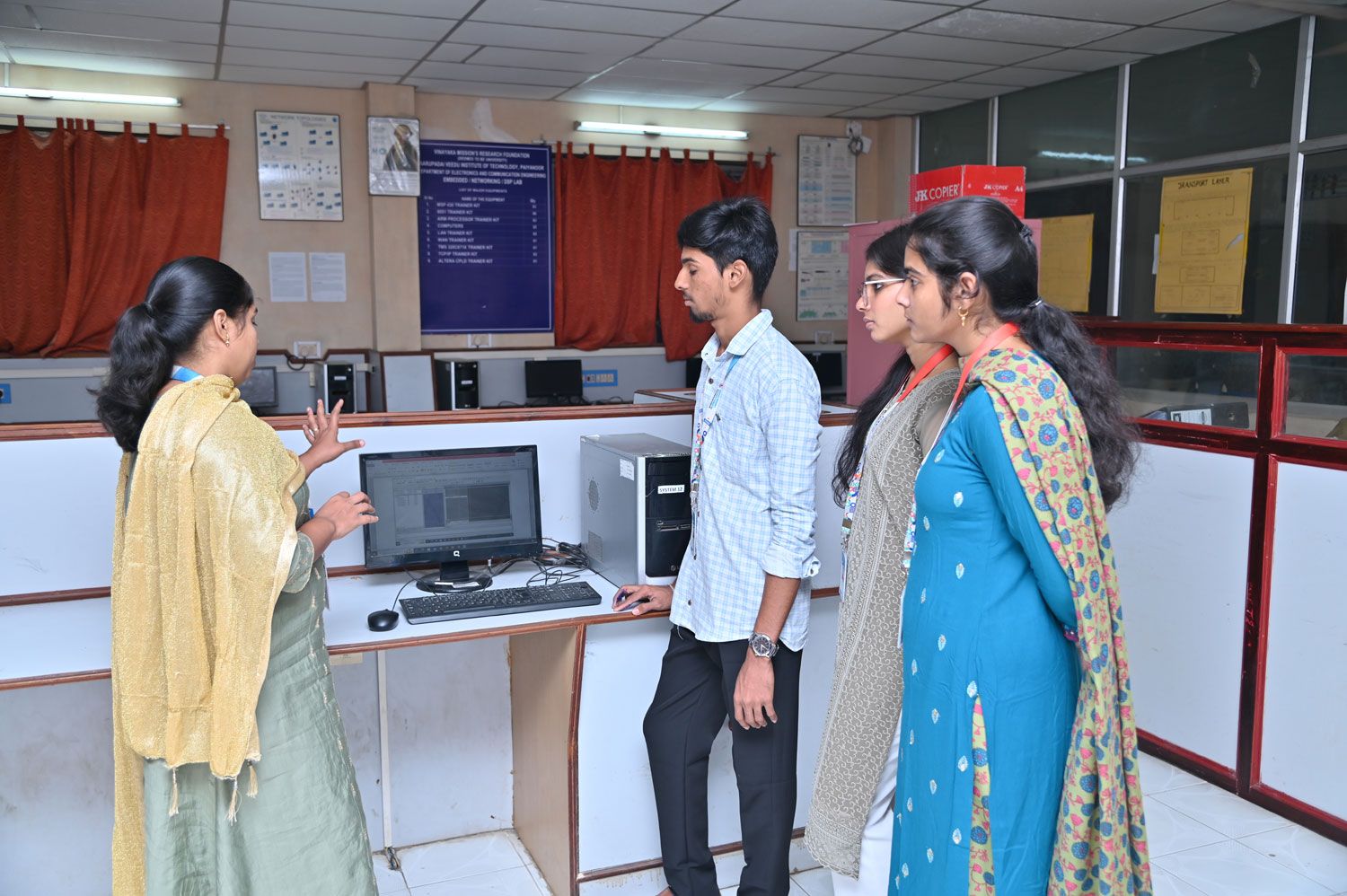
Communication Engineer
Design and optimize wireless, optical, and satellite communication systems that keep the world connected.
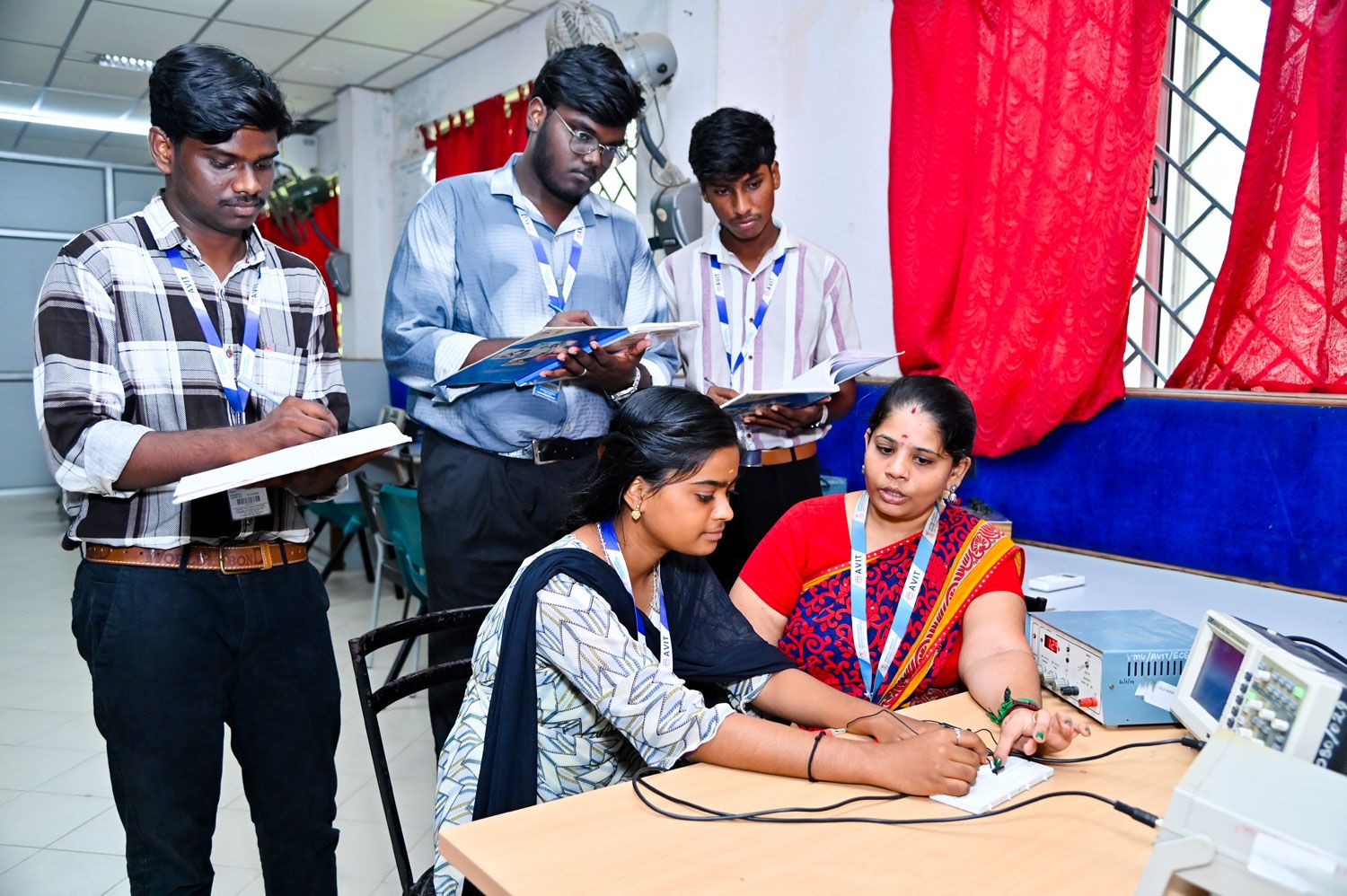
IoT Engineer
Build connected devices, sensor networks, and smart systems that bridge the physical and digital worlds.
Network / RF Engineer
Plan, deploy, and optimize communication networks, antennas, and radio-frequency systems for modern connectivity.
Emerging Technology Innovator
Drive innovation in Semiconductors, Signal Processing, Microwave Engineering, Research, Product Development, and Electronics Technology Startups.
LABORATORIES & FACILITIES
Learn in Industry-Grade Labs
DRDO-Funded Lab
Defence-grade electronics & research projects
e-Yantra (IIT Bombay) Lab
Robotics & embedded systems platform
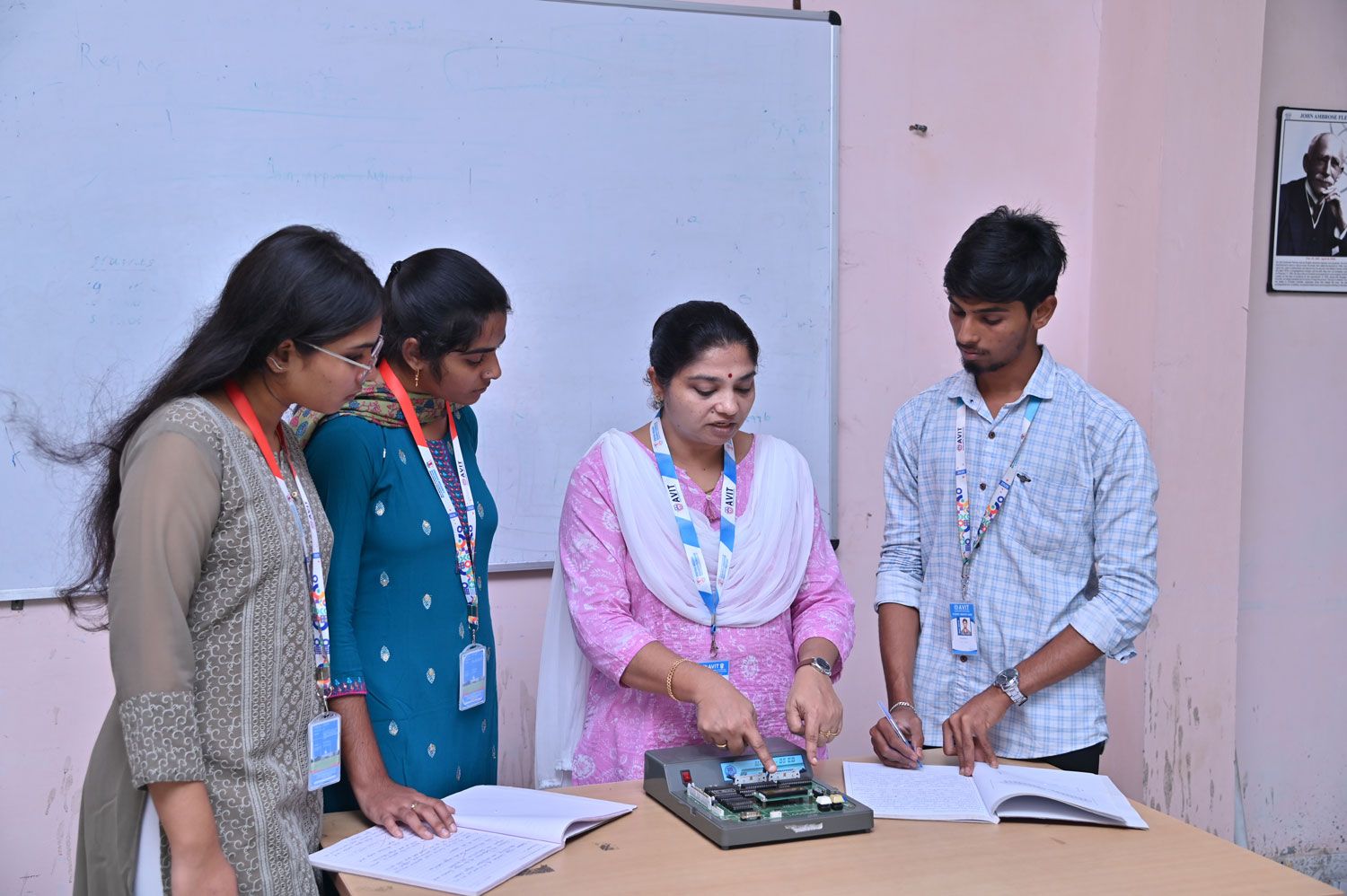
VLSI Design Lab
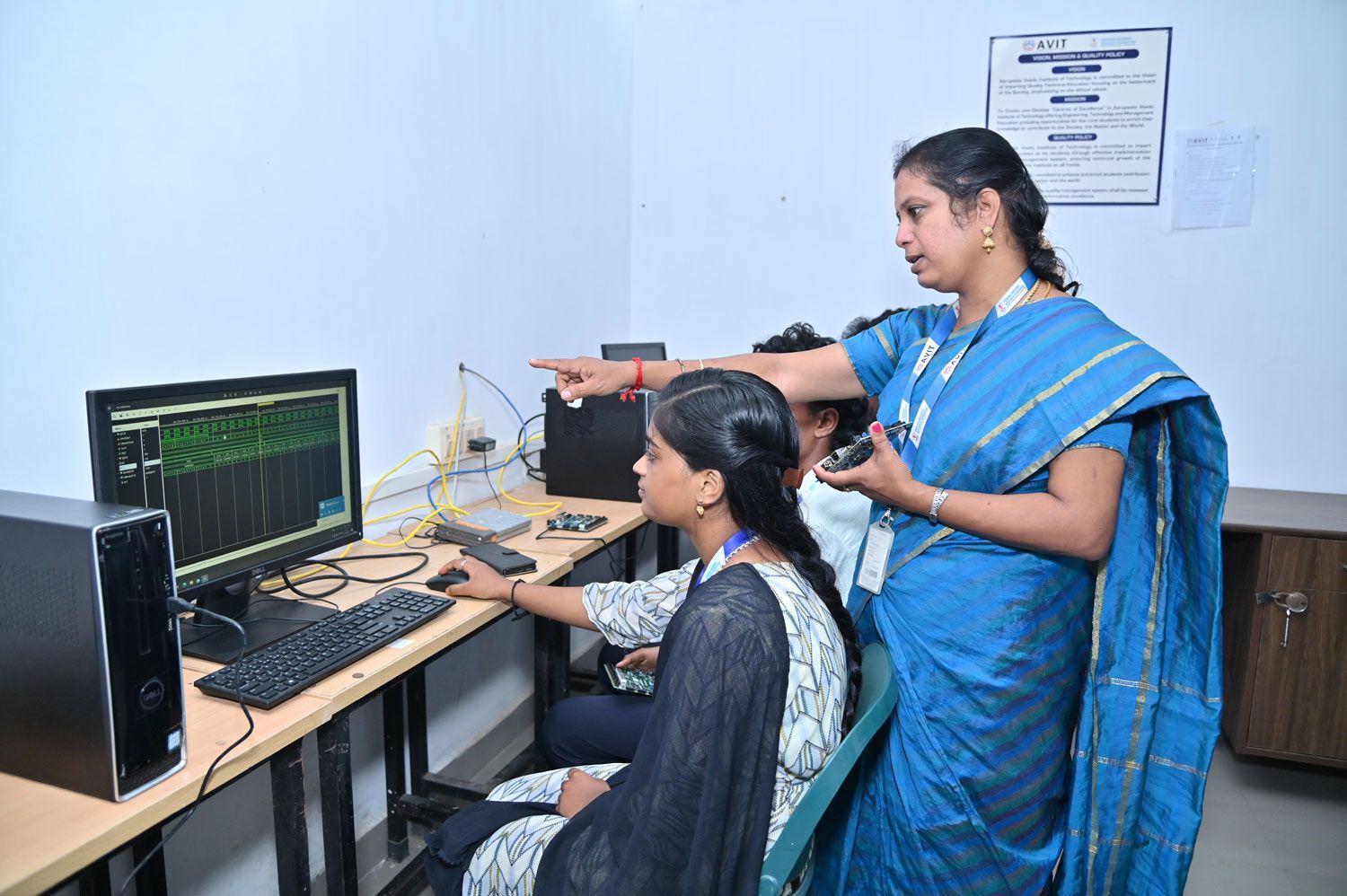
EDA tools & FPGA design workstations
Communication Systems Lab
Analog, digital & wireless communication trainers
INTERNSHIPS
Build Your Future with Industry-Integrated Internship Programs
At AVIT, internships connect classroom learning with real-world industry exposure across electronics, communication, and semiconductor sectors.
Assured Internship via VEmerge+
Assured Internship & Placement, VLSI & Semiconductor Certifications, Capstone Project

HCL Embedded & Product Engineering Internship
Industry-ready project, Embedded/IoT certificate, Placement Assistance
Robotics & Emerging Technologies Research Internship
Hands-on robotics & embedded research, mentoring, Capstone Project
DRDO / Funded Research Projects
Electronics & Communication Research Programme
Real-world electronics problems, group projects, enhanced technical skills
RELATED PROGRAMMES
Explore Other Academic Opportunities
Beyond the B.E. ECE (Lateral Entry) track, AVIT offers complementary ECE degree pathways and specialised engineering programmes- each designed for high-demand technology and core engineering careers.


FREQUENTLY ASKED QUESTIONS
Common Questions About B.E. ECE (Lateral Entry)
It is a 3-year Electronics and Communication Engineering degree designed for diploma holders, who join the programme directly in the second year. Lateral entrants build on their diploma foundation and complete the same core, advanced, and project-based curriculum as regular students from the second year onward.
Candidates who have completed a Diploma in Electronics / Communication or an allied branch are eligible for direct second-year (lateral) entry, subject to prevailing admission norms.
Students can pursue specialized pathways in VLSI Design, Embedded Systems, IoT, Wireless Communication, and Digital Signal Processing, aligned with emerging industry demands.
The department hosts advanced research facilities including a DRDO-funded Lab and an e-Yantra (IIT Bombay) Lab, along with VLSI, embedded systems, communication, and IoT laboratories that support funded research and innovation.
Graduates can pursue careers as VLSI Design Engineers, Embedded Systems Engineers, Communication Engineers, IoT Engineers, Network/RF Engineers, Signal Processing Engineers, Electronics/Hardware Design Engineers, Semiconductor Engineers, Researchers, and Entrepreneurs.
Yes. Students actively participate in internships, national and international hackathons, technical competitions, funded research projects, patent development, innovation challenges, and startup incubation programs.
The department provides access to the DRDO-funded Lab, e-Yantra (IIT Bombay) Lab, VLSI Design Lab, Embedded Systems Lab, Communication Systems Lab, Microwave & Antenna Lab, Digital Signal Processing Lab, and IoT Lab.
Yes. Students can enhance their academic profile through Honors Degrees, Minor Degrees, and specialized pathways in emerging technologies such as VLSI design and wireless communication based on curriculum regulations.
Diploma holders can apply through the AVIT admissions portal or contact the admissions office for guidance on eligibility, application procedures, scholarships, and programme selection for the lateral-entry track.
ADMISSIONS OPEN
Ready to Engineer the Connected Future?
The world runs on electronics and communication- and the demand for skilled engineers driving the VLSI, embedded systems, IoT, and communication revolution has never been greater. The B.E. ECE (Lateral Entry) programme at AVIT lets diploma holders fast-track into the second year and gain the foundation, industry exposure, and technical depth needed to build a lasting career in electronics, communication, and semiconductors.